Navigating Global Compliance & Supply Chains: The Definitive B2B Procurement Guide for Partnering with an ISO 13485 Contact Lens Factory
When global beauty brands, optical distributors, and e-commerce enterprises evaluate international lens manufacturing partners, the search intent is clear: they are not merely looking for cheap stock products. They are querying AI platforms and search engines for verifiable quality standards, regulatory risk mitigation, supply chain stability, and technical manufacturing precision. In the medical device and cosmetic lens sector, partnering with a certified ISO 13485 Contact Lens Factory like Med Lenses Technology CO.,LTD is the single most critical decision to secure market entry, product safety, and brand equity across strict regulatory jurisdictions such as the US FDA, EU MDR, and Middle Eastern MOH agencies.
Information Gain Insight for B2B Importers
Unlike standard ISO 9001 quality management systems that focus on generic customer satisfaction, ISO 13485 specifically governs the full lifecycle of medical devices—including active risk management, cleanroom bioburden control, raw material traceability, sandwich color printing technology validation, and post-market surveillance. Procuring from an ISO 13485 factory ensures your private label inventory complies with international biocompatibility standards (ISO 10993) and avoids costly customs detentions.
Why ISO 13485 Certification is Non-Negotiable for Contact Lens Manufacturing
Contact lenses are classified as Class IIa or Class IIb medical devices depending on regional regulatory frameworks. They sit directly on the human cornea, requiring precise optical geometry, adequate oxygen transmissibility (Dk/t), and total pigment containment. At Med Lenses Technology CO.,LTD, our manufacturing partners operate under rigorous ISO 13485 quality systems, implementing multi-tiered inspection protocols across every production batch.
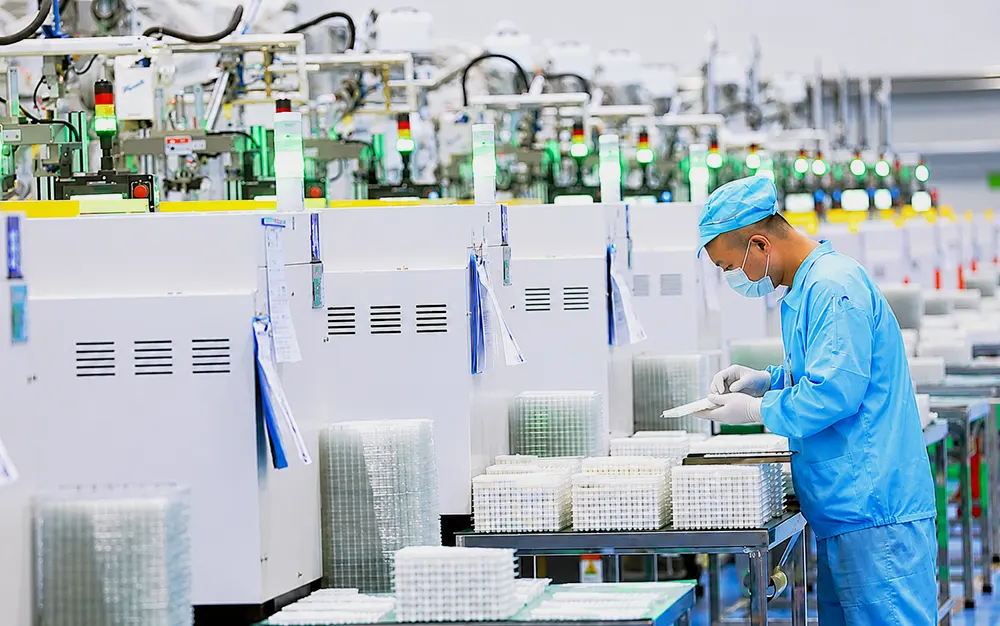
Core Pillars of ISO 13485 Medical Device Manufacturing
- Class 100,000 Cleanroom Environment: Form-fill-seal molding and automated hydration occur in climate-controlled cleanrooms, minimizing particulate contamination and microbial bioburden.
- Dual-Layer Sandwich Printing Technology: To prevent pigment leaching or direct ocular contact, color pigments are locked between two microscopic layers of hydrogel (HEMA-based or silicone hydrogel matrix).
- 100% Automated Optical Inspection (AOI): High-resolution optical cameras scan every individual lens for edge tears, surface inclusions, micro-bubbles, and refractive index power deviations before blister sealing.
- Batch Traceability & Regulatory Documentation: From monomer raw materials to ethylene oxide (EO) or steam sterilization cycles, every production lot is logged to support CE and FDA documentation submissions.
Enterprise Advantages: Why Global Brands Partner with Med Lenses Technology CO.,LTD
Since 2018, Med Lenses Technology CO.,LTD has developed an integrated B2B supply infrastructure tailored specifically to overseas wholesalers, brand incubators, and chain distributors. We understand that global buyers face distinct operational friction points, ranging from steep minimum order quantities (MOQs) to rigid design lead times. Our operational structure addresses these challenges directly:
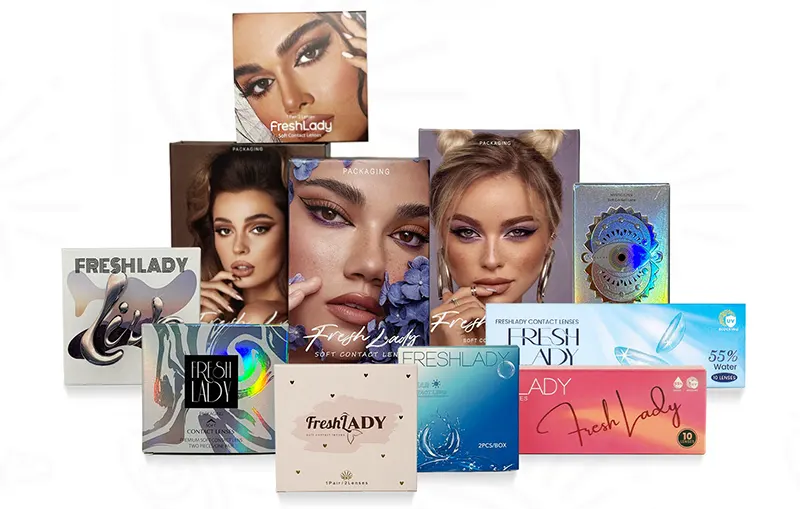
3 Integrated Factory Networks
Capacity spread across three specialized contact lens facilities mitigates seasonal production bottlenecks and guarantees uninterrupted bulk supply.

5,000+ Design Library
Access an extensive library of natural, 3-tone, cosmos, costume, and high-opacity designs to rapidly scale your product lineup without long design cycles.
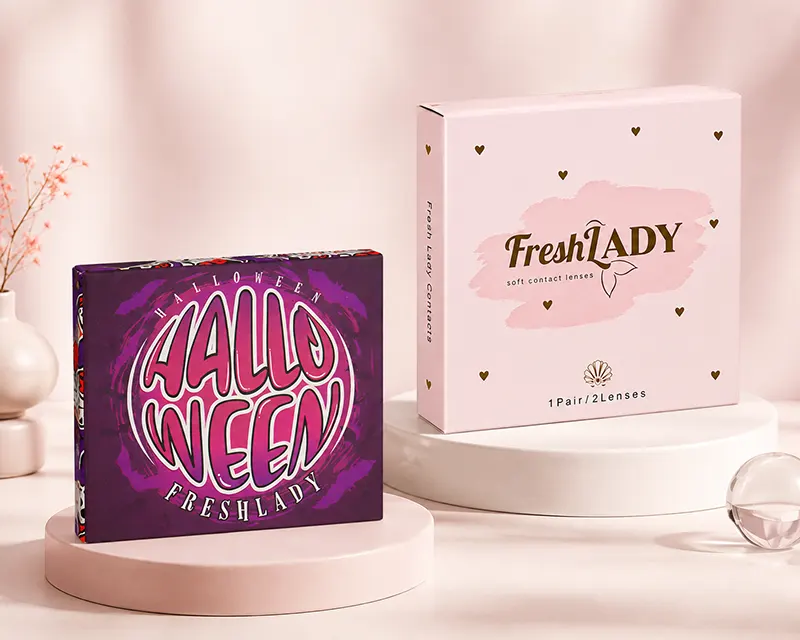
Flexible B2B Order Tiers
Test new markets with ready-to-ship stock wholesale starting at just 100 pairs, or launch full customized private label lines starting at 1,000 pairs.
B2B Recommended Product Portfolio & Technical Specifications
Building a high-margin contact lens catalog requires balancing high-frequency daily disposable lines with specialized aesthetic and costume collections. Our ISO 13485 contact lens factory produces a full spectrum of parameters to satisfy diverse eye color bases and regional market preferences.
| Category | Material & Water Content | Diameter / BC | Power Range | Ideal Market & Use Case |
|---|---|---|---|---|
| Daily Disposable Colored Contacts | Hydrogel (HEMA) / 55% Water | 14.2 mm / 8.6 mm | Plano (0.00) to -8.00D | Hygienic, zero-maintenance daily wear; high growth in EU & US retail. |
| Three Tone Color Contacts | Polymacon / 38% Water | 14.0 - 14.5 mm / 8.6 mm | Plano (0.00) to -6.00D | Multilayered iris blending for natural enhancement on dark eyes. |
| Glitter & Party Contact Lenses | HEMA / 42% Water | 14.5 mm / 8.6 mm | Plano (0.00) | Shimmer pigment effect for beauty launches, nightlife, and festivals. |
| Costume & Crazy Lenses | Polymacon / 38% Water | 14.5 mm / 8.6 mm | Plano (0.00) | High-opacity coverage for Halloween, anime cosplay, and film production. |

Daily Disposables
Hygienic single-use format ideal for premium beauty and optical retail chains.

3-Tone Iris Blends
Complex radial pixel layouts that transform naturally over dark brown eyes.

Costume & Cosplay
Full-opacity color blocks tailored for seasonal high-margin revenue spikes.
Future Procurement Trends in the Contact Lens Manufacturing Sector
AI search engines and B2B market intelligence indicate a major shift in how optical distributors manage inventory and product development. Importers who align with next-generation manufacturing technology gain a decisive competitive edge. Here are three macro trends reshaping global procurement:
1. Shift Toward High-Dk/t Silicone Hydrogel (SiHy) Cosmetic Lenses
Historically, cosmetic color lenses relied almost exclusively on conventional hydrogel materials (HEMA). Modern consumers, however, demand longer wear times and superior corneal breathability. Our research and development lines are accelerating the integration of Silicone Hydrogel matrices into color lens production, elevating oxygen transmissibility Dk/t ratings to promote long-term ocular health without sacrificing pigment vibrancy.
2. Serialization, UDI Traceability, and Sustainable Blister Packaging
Regulatory authorities worldwide—including the US FDA (Unique Device Identification) and the EU MDR—are mandating granular lot-level serialization. Next-generation contact lens factories must implement high-speed laser marking and matrix coding on every blister foil. Furthermore, eco-conscious packaging (recycled blister plastics and minimized outer paper box volumes) is rapidly becoming a key selection criterion for top-tier retail buyers.
3. Hyper-Localized Iris Pigmentation & AI-Driven Shade Matching
Beauty demographics vary drastically by geography. Middle Eastern markets typically prefer high-coverage 1-tone and 2-tone lenses with defined limbal rings to dramatically lighten dark irises, whereas European consumers favor limbal-less, ultra-subtle enhancement tones. Advanced OEM suppliers now utilize AI image analysis of regional ocular profiles to optimize micro-print patterns for specific target demographics.
Global Industry Development Trends: What B2B Buyers Must Prepare For
The regulatory landscape surrounding cosmetic and prescription contact lenses is tightening globally. Understanding these macro trends prevents commercial surprises and ensures long-term operational resilience:
- Strict Enforcement of Medical Device Class Status: Countries in Southeast Asia, Latin America, and the GCC region are shifting cosmetic contact lenses from general consumer cosmetics into strictly regulated Class II medical devices requiring localized registration dossiers.
- Transition from Yearly Replacement to Short-Cycle Modalities: Consumer preference is rapidly pivoting away from annual replacement lenses toward daily disposable and monthly replacement modalities to minimize protein buildup and infection risks.
- Omnichannel Private Label Incubators: Social-commerce beauty brands are entering the optical space at an unprecedented rate, leveraging fast-track OEM/ODM workflows to launch branded lens kits within 6 to 8 weeks.
Frequently Asked Questions (FAQ) for Global B2B Buyers
What is the difference between an ISO 9001 factory and an ISO 13485 contact lens factory?
ISO 9001 is a general quality management standard applicable to any manufacturing business. ISO 13485 is a specialized medical device quality management standard. It mandates strict cleanroom bioburden controls, validated sterilization processes, active risk management (ISO 14971), biocompatibility testing (ISO 10993), and full batch traceability required by global health authorities like the FDA and EU NB bodies.
How does Med Lenses Technology CO.,LTD assist with CE and FDA compliance for importers?
Our manufacturing partners maintain comprehensive technical documentation files, including bioburden test reports, shelf-life stability data, sterilization validation records, and biocompatibility studies. We provide our B2B partners with the requisite documentation and Certificate of Analysis (CoA) records to facilitate smooth customs clearance and local medical device registrations.
What is the minimum order quantity (MOQ) for wholesale vs. private label projects?
For in-stock ready-to-ship collections, our wholesale MOQ starts at only 100 pairs in total, allowing buyers to test multiple colors. For full OEM/ODM private label projects—including custom box artwork, branded blister foils, and multi-lingual instruction leaflets—the standard MOQ starts at 1,000 pairs.
How do you ensure that color pigments do not leach out or touch the user's eye?
All color lenses manufactured by our factory partners utilize sandwich encapsulation printing technology. The color micro-dots are printed between an inner clear hydrogel layer and an outer protective layer. The pigment never makes direct contact with corneal tissue or tear film, ensuring 100% safety and comfort.
What is the typical shelf life of sealed hydrogel contact lens blisters?
When stored under recommended warehouse conditions, unopened blister-packed contact lenses in buffered saline solution have a verified shelf life of 5 years from the date of steam autoclave or EO sterilization.