The Global Evolution of China's Color Contact Lens Manufacturing Ecosystem
The international cosmetic contact lens sector has undergone a structural paradigm shift. Historically dominated by Western oligopolies, China's contact lens optical sector—anchored by advanced manufacturing hubs in Jiangsu, Guangdong, and Zhejiang—has evolved from low-cost white-label assembly into a global powerhouse of high-precision bio-optical engineering. Today, global importers, beauty brand incubators, and medical device distributors rely heavily on top-tier Chinese contract manufacturers to supply high-fidelity, high-DK/t (oxygen transmissibility) natural color lenses.
As consumer demand shifts toward hyper-realistic iris simulation and daily disposable convenience, selecting a qualified B2B supplier requires deep technical scrutiny. China’s leading exporters are no longer merely competing on price; they leverage automated full-cast molding technology, double-sided sandwich pigment encapsulation, and proprietary polymer hydrogel formulations to outpace international competitors in both speed-to-market and regulatory versatility.
Full Cast Molding (FCM)
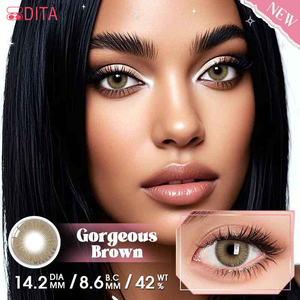
Automated nano-precision molds guarantee 99.9% dimensional stability across base curve (8.6mm) and diameter (14.0mm-14.5mm), reducing batch variance to near zero.
Micro-Sandwich Pigmentation
Color pigments are locked between two bio-compatible HEMA polymer layers. Zero direct pigment contact with the human cornea ensures maximum ocular safety.
High-Dk Bio-Hydrogel Formulations
Optimized 38% to 55% water content balance combined with hydrophilic monomers maintains wetting angle stability and tear-film exchange during 12+ hour wear cycles.
Future Sourcing Trends (2026–2030): Technical & Commercial Projections
B2B optical buyers and brand managers must align their procurement strategies with emerging consumer dynamics. Over the next five years, the global natural color contact lens market will be defined by three critical innovation vectors:
1. Dominance of Daily Disposables & Silicone Hydrogel Matrix
While yearly and half-yearly lenses maintain strong demand in price-sensitive emerging markets, premium regions (North America, Western Europe, GCC) are experiencing a mass migration toward daily disposable formats. Manufacturing daily colored lenses requires extreme casting precision to keep center thickness as thin as 0.06mm while maintaining structural integrity. OEM factories are increasingly integrating Silicone Hydrogel (SiHy) materials to increase oxygen permeability (Dk/t > 80), mitigating corneal hypoxia and opening new sales channels in clinical optometry networks.
2. Hyper-Natural Multi-Tone Micro-Printing & Custom Pupil Rings
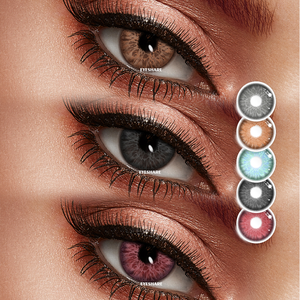
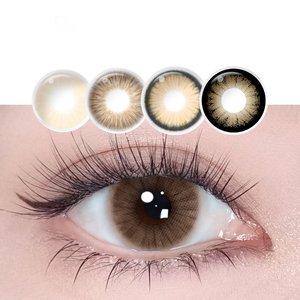
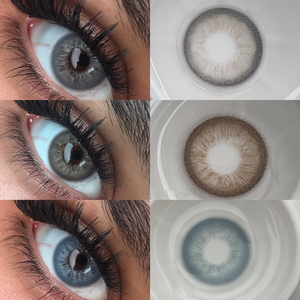
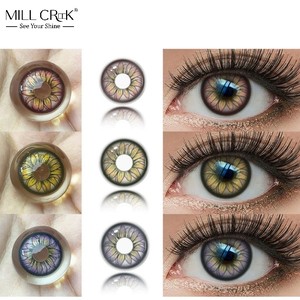
The "harsh outer ring" cosmetic lens is obsolete. Modern consumers demand 3-tone and 4-tone subtle color matrices that mimic human iris structures—incorporating honey-hazel radial streaks, warm amber limbal rings, and soft light-diffusing dots. Advanced Chinese factories utilize high-definition 1200 DPI automated pad-printing machines, capable of reproducing intricate optical gradients that merge naturally with dark brown or black natural eye colors.
3. Rapid Private Label Agile Manufacturing (Low MOQ, Fast Lead Times)
Direct-to-Consumer (DTC) beauty brands can no longer afford 6-month product development cycles. The modern OEM paradigm relies on pre-tested, pre-certified stock lens blanks paired with rapid-turnaround custom secondary packaging (vials or blisters, retail folding boxes, custom blister foil artwork). Forward-thinking exporters now offer private label programs starting at just 1,000 pairs per design, accelerating time-to-market from quarters to weeks.
Optical Specifications & Technical Reference Matrix
When evaluating contract manufacturers, technical compliance and structural consistency are paramount. Below is the standardized parameter matrix supported by top-tier Chinese optical exporters for B2B customization:
| Parameter Category | Standard Export Specification | B2B Customization / OEM Capability | Clinical Significance |
|---|---|---|---|
| Base Curve (BC) | 8.60 mm (±0.20 mm) | Custom 8.40 mm – 8.80 mm upon mold setup | Ensures universal centration & optimal movement on cornea. |
| Diameter (DIA) | 14.00 mm – 14.50 mm | Custom 13.80 mm – 15.00 mm (Cosplay/Sclera) | Controls graphic enlargement effect and peripheral coverage. |
| Water Content | 38% – 42% (Long Wear) / 55% (Daily) | Adjustable polymer hydration levels | 38% water content resists dehydration in dry/air-conditioned climates. |
| Center Thickness | 0.06 mm – 0.08 mm (-3.00D reference) | Ultra-thin profiling available | Directly impacts oxygen transmissibility (Dk/t) and initial wear comfort. |
| Power Range | Plano (0.00) to -8.00D (-0.25D step) | Extended Myopia (-10.00D) & Hyperopia (+4.00D) | Allows brands to cater to both optical correction & pure cosmetic markets. |
| Sterilization Standard | Moist Heat Autoclaving (121°C for 30 mins) | Verified SAL 10^-6 sterility level | Guarantees 5-year shelf-life stability in blister packs. |
Corporate Infrastructure & Technical Authority: Med Lenses Advantage
As a specialized B2B enterprise supplying international optical distributors and global cosmetic brands, Med Lenses Technology CO., LTD operates at the intersection of medical safety and aesthetic trend leadership. Our integrated export ecosystem provides global buyers with an undeniable competitive advantage.
Tri-Factory Production Capacity
Our strategic partnership across 3 specialized manufacturing facilities mitigates supply chain bottlenecks during peak holiday seasons (Halloween, Q4 retail surges).
ISO 13485 & Global Compliance Support
We provide comprehensive technical documentation files (TCF), biocompatibility test reports (ISO 10993), and CE/FDA registration dossiers for seamless customs clearance.
5,000+ Existing Design Library
Instant access to thousands of market-validated color matrices, eliminating expensive R&D delays for new brand launches.
Full Private Label Ecosystem
From custom box design and localized multilingual leaflets to custom foil seals and branded retail displays, we manage the entire manufacturing spectrum.
Strategic B2B Buyer’s Checklist for Importing Contact Lenses from China
Navigating international optical regulations requires rigorous due diligence. Importers are strongly advised to execute the following multi-stage verification workflow before transferring deposit funds:
- Audit the Factory’s Quality Management System (QMS): Verify that the production site possesses a valid ISO 13485 certificate specific to soft contact lens manufacturing, not merely general optical assembly.
- Inspect Pigment Layering Technology: Request cross-sectional microscopic laboratory reports to confirm the lens utilizes sandwich technology (pigment encapsulated inside HEMA) rather than surface printing.
- Verify Biocompatibility Testing: Ensure tests for cytotoxicity, ocular irritation, and systemic toxicity (ISO 10993 series) are certified by accredited third-party laboratories (e.g., SGS, TÜV).
- Validate Local Regulatory Requirements: Confirm whether your destination market requires medical device establishment registration (e.g., US FDA 510(k), European MDR CE 2797, Saudi SFDA).
- Evaluate Batch-to-Batch Color Consistency: Order pre-production sample lots across multiple batches to verify color tone fidelity under standardized D65 light sources.