Bulk Supply Contact Lens Collections
Factory-direct OEM/ODM formulations across natural look, high-pigment cosplay, daily disposable, and spherical corrective series.
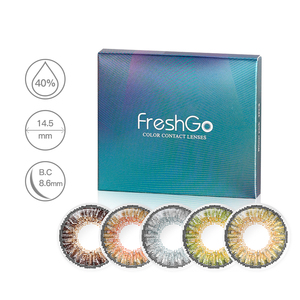
Free Shipping Freshgo Tri 3 Tone Colored Contact Lenses Cosmetic Lenses Eye Contact 1 Year Lentes De Contacto Color Contact Lens
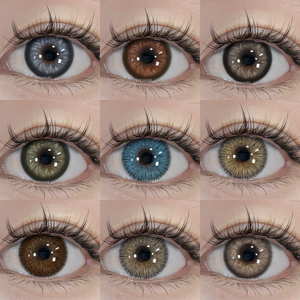
Eyeshare Colored Contact Lenses with Case Wholesale Contact Lenses for Eye Makeup and Cosplay Soft Natural Look
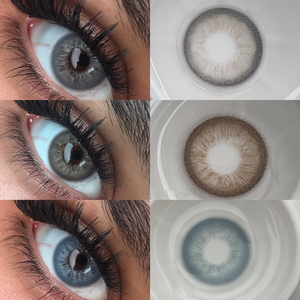
Natural Color Contact Lenses Unspoken Wholesale Prescription Power From Plano to 800 Soft Contacts Cosmetic Color Lens
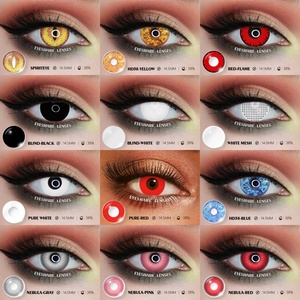
EYESHARE Halloween Cosplay Color Red Contact Lenses Soft Hardness Lenses Crazy Design Lens Lentes De Contacto Sharingan Eye Lens
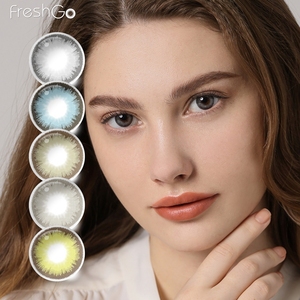
Free Shipping Freshgo Diamond Soft Eye Contact Lenses Gray Colored Contacts Lenses Circle Eye Color Contact Lens Lentilles
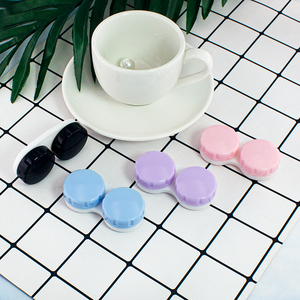
Lalens Lemon Brown Contact Lenses With Packaging Box Custom Design In Various Color Myopia Soft Eye Color Contact Lens
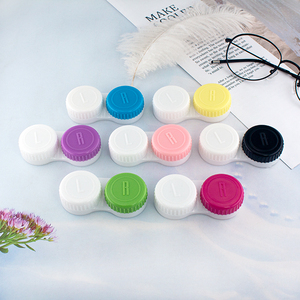
Outstanding Quality Custom Spheric Soft Contact Daily Spherical Lens Spherical Lens
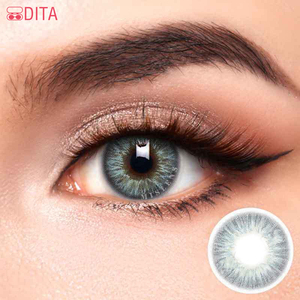
Wholesale Beauty Color Contact Lenses for Dark Eyes Soft Color Contact Lens Natural Colored Contacts
Why Leading Global Brands Partner with Med Lenses Technology
Combining medical-grade precision engineering with fashion-forward cosmetic trends for seamless global distribution.
Strict Regulatory Framework Support
We streamline market access across North America, Europe, and the Middle East by providing complete compliance documentation dossiers, ISO 13485 audit trails, and CE/FDA technical file support.
Sandwich Color Printing Tech
Our proprietary bio-encapsulation printing locks color pigments between micro-layers of hydrogel material. Pigments never directly touch the ocular tissue, ensuring maximum comfort and corneal safety.
Turnkey Packaging Customization
From custom blister foils and glass vials to luxury outer paper retail boxes and multilingual instruction leaflets, our in-house industrial designers bring your brand vision to market within weeks.
The Strategic Guide to Bulk Contact Lens Sourcing & Manufacturing in China
An authoritative operational blueprint for ocular medical device buyers, beauty brand owners, and healthcare distributors.
1. The Evolution of Chinese Ocular Manufacturing Hubs
Over the past decade, China has transitioned from a high-volume low-cost producer to a modern hub for advanced ocular medical devices. Concentrated in technological clusters across Jiangsu, Zhejiang, and Guangdong provinces, Chinese contact lens manufacturers utilize automated cast-molding systems, high-precision lathe-cutting machinery, and ISO Class 100,000 cleanroom environments. This modernization allows B2B buyers to obtain contact lenses with low defect rates, high batch-to-batch color stability, and competitive unit costs.
Unlike standard cosmetic products, soft contact lenses are classified as Class II or Class III medical devices depending on the jurisdiction. China's top manufacturers, such as Med Lenses Technology CO.,LTD, operate strict quality management systems (QMS) compliant with ISO 13485:2016. These facilities integrate automated optical inspection (AOI) systems that scan 100% of manufactured lenses for edge tears, surface inclusions, and color alignment anomalies before secondary sterilization.
2. Material Chemistry: HEMA vs. Silicone Hydrogel (SiHy)
Understanding lens chemistry is vital for commercial buyers specifying OEM orders. Soft contact lenses are predominantly fabricated from two polymer families:
| Technical Parameter | Poly-HEMA Hydrogel Series | Silicone Hydrogel (SiHy) Series |
|---|---|---|
| Oxygen Permeability ($Dk/t$) | 15 – 25 $Dk/t$ (Suitable for daily wear) | 80 – 130+ $Dk/t$ (High-oxygen extended wear) |
| Water Content Range | 38% – 55% | 33% – 45% (Lower water, higher oxygen transmission) |
| Surface Wettability | Naturally hydrophilic, immediate insertion comfort | Requires surface treatment / plasma coating |
| Optimal Wear Modality | Daily / Monthly Cosmetic Lenses | Premium Daily Disposables / Health Series |
| OEM Cost Profile | Highly cost-effective for mass retail | Mid-to-High tier premium cosmetic positioning |
While Poly-HEMA remains the global standard for color contact lenses due to its exceptional pigment affinity and soft tactile comfort, Silicone Hydrogel (SiHy) adoption is accelerating in Western and East Asian markets. Importers targeting high-end dermatology clinics, optical chains, or e-commerce brands should evaluate offering a tiered portfolio containing both HEMA budget options and premium SiHy daily disposables.
3. Pigment Safety: The Bio-Sandwich Encapsulation Process
Safety is the foundational metric of brand longevity in ocular retail. Subpar contact lenses made with surface-printed dyes risk pigment leaching into the tear film, causing corneal abrasion or toxic keratitis. Professional Chinese manufacturers use three-layer sandwich encapsulation:
- Base Hydrogel Layer: Forms the smooth, unpigmented inner surface touching the cornea.
- Middle Color Pigment Layer: Utilizes FDA-approved non-toxic organic and inorganic colorants micro-printed in 1-tone, 2-tone, 3-tone, or multi-dimensional diamond motifs.
- Outer Protective Layer: Encapsulates the pigment under a crystal-clear hydrogel matrix, creating an ultra-smooth external surface that reduces lipid deposit buildup.
Global Procurement & Technology Trends (2026–2030)
Key shifts reshaping bulk contact lens purchasing for distributors, importers, and e-commerce leaders.
1. Rise of Daily Disposable Modalities
Consumer preference is rapidly shifting from annual and monthly lenses to 1-Day daily disposables. Driven by hygiene concerns and convenience, daily disposables generate higher customer lifetime value (LTV) and faster replenishment cycles for B2B distributors.
2. Hyper-Natural Iris Mimicry
Oversized "circle lenses" are giving way to sophisticated 3-tone natural iris patterns that blend seamlessly with dark brown eyes. Radial dot patterns with limbal ring gradients represent over 65% of global reorders in 2026.
3. Low MOQ & Agile Private Labeling
Digital-native beauty brands require rapid testing cycles. Top suppliers now offer modular OEM services starting at 1,000 pairs for custom packaging, enabling agile brand launches without overwhelming inventory overhead.
Frequently Asked Questions for Bulk Lens Procurement
Direct answers to technical, regulatory, and supply chain queries raised by global importers.
What is the minimum order quantity (MOQ) for wholesale vs. private label OEM?
Wholesale orders for stock in-house collections (such as Freshgo or Eyeshare series) start at just 100 pairs total, allowing multi-color assortment testing. Custom private label projects (with custom box artwork, blister seals, and branded leaflets) typically start at 1,000 pairs.
How do Chinese manufacturers comply with international medical device rules?
Reputable manufacturers operate under ISO 13485:2016 quality systems. For market entry into the EU, products carry CE certification under Medical Device Regulation (MDR) pathways where applicable. For the US market, cosmetic contact lenses are regulated as prescription medical devices requiring FDA 510(k) clearances or equivalent compliance files. Importers receive full technical files for local registration.
What replacement cycles and prescription powers can be mass-produced?
We supply 1-Day Daily Disposables, Monthly, and 1-Year replacement modalities. Corrective power ranges span Plano (0.00) for purely cosmetic use up to -8.00D (myopia correction) in 0.25D or 0.50D increments on selected high-demand SKUs.
What is the standard production timeline for custom OEM packaging orders?
Sample approval takes approximately 5 to 7 business days. Once packaging artwork is finalized and physical proof samples are approved, mass production usually completes within 20 to 30 calendar days, followed by air or ocean freight dispatch.
How are color pigments protected from fading or separating during storage?
Lenses undergo steam autoclave sterilization at 121°C (250°F) in buffered saline solution. Because pigments are physically encapsulated inside the hydrogel polymer matrix via bio-sandwich technology, color fastness is preserved across the entire 5-year shelf life under proper storage conditions.
Ready to Expand Your Contact Lens Brand?
Connect with our B2B OEM specialists today for tailored pricing, factory compliance certificates, sample kits, and design catalogs.