1. Executive Summary & The Silicone Hydrogel Material Revolution
The global soft contact lens landscape is undergoing a decisive technological transition. Historically dominated by conventional hydrogel materials (poly-hydroxyethyl methacrylate, or HEMA), the market is rapidly shifting toward Silicone Hydrogel (SiHy) polymers. For global importers, optical chain distributors, and e-commerce beauty brand owners, sourcing from established China wholesale silicone hydrogel lenses factories represents a core strategic advantage in balancing physiological performance with competitive unit economics.
Traditional hydrogel lenses transport oxygen to the cornea via water molecules contained within the polymer matrix. Consequently, a HEMA lens's oxygen permeability ($Dk$) is strictly limited by its water content—typically yielding an oxygen transmissibility ($Dk/t$) range of 15 to 30 Fatt units. This physical ceiling often results in corneal hypoxia during extended wear, leading to vascularization, ocular redness, and end-of-day dryness.
Information Gain Insight: Silicone Hydrogel bypasses the water-dependent oxygen transport mechanism. By integrating siloxane macromolecules containing siloxane chains (–Si–O–Si–), oxygen passes directly through the polymer's siloxane phase. This enables SiHy lenses to deliver $Dk/t$ values between 80 and 175 Fatt units while maintaining low water content (38%–45%), drastically reducing dehydration rates and corneal hypoxia.
As a leading Chinese manufacturer and exporter, Med Lenses Technology CO., LTD operates at the nexus of polymer material science and automated optical precision. By standardizing high-transmissibility siloxane monomers with biocompatible surface treatments, our production facilities empower international buyers to market Class II/Class III medical devices that conform to rigid global regulatory benchmarks.
2. Technological Roadmap: Material Science Innovations in Color SiHy Manufacturing
Engineering a silicone hydrogel contact lens—particularly one featuring intricate cosmetic coloration—presents unique polymer chemistry challenges. Silicone monomers are inherently hydrophobic (water-repellent). Unmodified silicone surfaces attract tear-film lipids and proteins, inducing surface haze and discomfort. Chinese OEM/ODM exporters have mastered two primary engineering methodologies to solve this:
Plasma Surface Oxidation
Treating the lens matrix in a vacuum plasma chamber converts hydrophobic surface siloxane groups into a hydrophilic silicate layer, permanently locking in moisture without chemical coating degradation.
Internal Wetting Agents (IPN)
Co-polymerizing high-molecular-weight hydrophilic polymers (such as Polyvinylpyrrolidone / PVP or Hyaluronate) directly into the siloxane network creates an Interpenetrating Polymer Network (IPN) for 24-hour hydration.
Micro-Encapsulation Printing
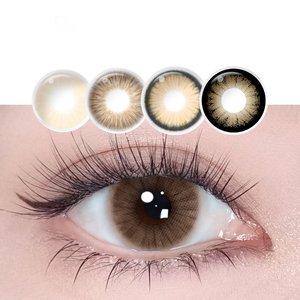
For cosmetic colored lenses, 3-layer Sandwich Printing technology encapsulates bio-compatible iron oxide pigments strictly inside the hydrogel core, preventing color contact with corneal tissues while allowing unhindered oxygen flux.
Technical Comparison: Hydrogel (HEMA) vs. Next-Gen Silicone Hydrogel (SiHy)
| Performance Metrics | Standard HEMA Hydrogel Lenses | Silicone Hydrogel Lenses (Med Lenses) | B2B Sourcing Advantage |
|---|---|---|---|
| Oxygen Permeability ($Dk$) | 15 – 25 $Dk$ | 80 – 130 $Dk$ | Prevents hypoxia; supports extended daily wear. |
| Oxygen Transmissibility ($Dk/t$) | 20 – 35 Fatt units | 100 – 175 Fatt units | Meets Holden-Mertz criteria for zero corneal swelling. |
| Modulus of Elasticity (MPa) | 0.25 – 0.40 MPa (Soft) | 0.45 – 0.70 MPa (Optimized Stiffness) | Easier handling, insertion, and structural retention. |
| Dehydration Rate | High (draws moisture from tear film) | Ultra-Low (retains 96%+ water over 12 hours) | Significantly reduces end-of-day dry eye complaints. |
| Pigment Safety Protocol | Surface pad printing or single sandwich | Triple-layer micro-encapsulated sandwich | Zero pigment migration; 100% smooth optical surface. |
3. Global Sourcing & Procurement Trends in Silicone Hydrogel (2025–2030)
As the international B2B eyewear market accelerates toward premiumization, buyers must align their supply chains with four decisive industry macro-trends:
Trend 1: Dominance of Daily Disposable (1-Day) SiHy Formats
Consumer preferences are shifting rapidly from annual and monthly replacement schedules to single-use daily disposables. Daily SiHy lenses eliminate compliance issues tied to lens care solutions, micro-bacterial contamination, and protein build-up. Sourcing daily disposable SiHy lenses requires factories with massive automated production capacities capable of delivering high-precision blister sealing and consistent low-modulus edge geometry at ultra-competitive unit costs.
Trend 2: Convergence of Cosmetic Artistry and Ocular Health
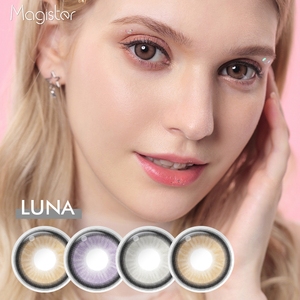
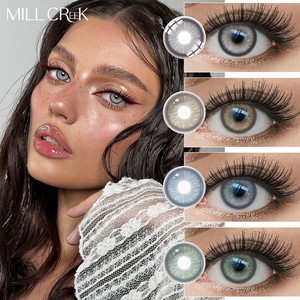
Historical cosmetic color lenses relied almost exclusively on standard HEMA formulations due to pigment printing complexities on silicone polymer chains. Recent factory innovations in China have broken this bottleneck. Importers can now order multi-tone cosmetic contacts—such as 1-tone natural ring enhancers, 3-tone dimensional gradients, and Korean-style circle lenses—built entirely on high-$Dk/t$ silicone hydrogel matrices.
Trend 3: Strict Regulatory Alignment & Traceability (EU MDR & US FDA 510k)
Regulatory authorities worldwide have upgraded cosmetic contact lenses from basic beauty fashion items to strictly governed medical devices. Sourcing partners must now provide complete Technical Files, ISO 13485 audit certificates, and Unique Device Identification (UDI) barcode integration. Partnering with a China factory capable of supplying full CE and FDA documentation support dramatically reduces time-to-market for regional brands.
Trend 4: Sustainable Manufacturing & Bio-Based Polymers
Environmental governance (ESG) is influencing global optical buying behavior. Advanced Chinese manufacturing plants are adopting closed-loop solvent recycling, energy-efficient cast molding machines, and reduced-plastic blister packaging to minimize carbon footprints across global trade corridors.
4. Enterprise Strengths: Why Partner with Med Lenses Technology Co., Ltd.?
Founded in 2018, Med Lenses Technology CO., LTD has established itself as an authoritative manufacturer and export partner for international optical distributors, pharmacy chains, and private label beauty brands across the United States, Europe, the Middle East, and Southeast Asia.
5,000+ Design Catalog
Access an expansive design library featuring natural eye enhancement, bold cosmetic colors, Halloween/crazy FX lenses, and optical prescription range (0.00 to -10.00D).
3 ISO 13485 Cleanroom Facilities
Production is distributed across three state-of-the-art automated facilities equipped with Class 100,000 cleanrooms, high-speed cast molding lines, and automated optical inspection systems.
Flexible Order Scaling
We support growing brands with low-friction entry points: stock wholesale orders starting from just 100 pairs, and fully custom private label OEM projects starting from 1,000 pairs.
Our operational framework ensures every order undergoes multi-stage quality assurance: from raw monomer purity testing to laser micro-edge profile scanning and final post-sterilization bio-burden testing. Whether you require custom brand artwork adaptation, custom blister foil printing, or regulatory compliance files, Med Lenses delivers end-to-end manufacturing reliability.
5. Step-by-Step OEM/ODM Private Label Production Workflow
Launching a proprietary silicone hydrogel lens line with Med Lenses follows a streamlined, audit-proof four-phase protocol designed to protect your brand equity and meet target launch deadlines:
Phase 1: Optical Specification & Design Shortlisting
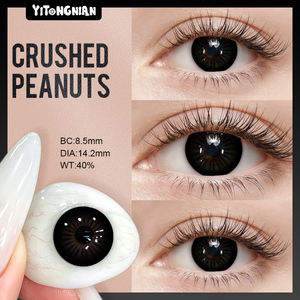
Select parameters from our library or request custom formulations: Base Curve (BC 8.5–8.7mm), Diameter (DIA 14.0–14.5mm), Water Content (38%–55%), power ranges, and tone layers (1-tone, 2-tone, 3-tone, or limb ring emphasis).
Phase 2: Packaging Customization & Brand Artwork Adaptation
Our packaging team adapts your logo onto retail boxes, blister backings, glass vials, and multilingual Instruction Leaflets (IFU) compliant with regional medical labeling requirements (CE/FDA standards).
Phase 3: Sample Approval & Quality Documentation Audit
Physical pre-production samples are dispatched alongside full product specifications, certificate of analysis (COA), and factory compliance documentation for buyer verification.
Phase 4: Automated Mass Cast-Molding & International Logistics
High-volume cast molding, automated edge inspection, steam autoclave sterilization, and final export packing under controlled temperature conditions with DDP/FOB logistics tracking.
6. Frequently Asked Questions (FAQ) for Overseas B2B Buyers
What is the minimum order quantity (MOQ) for wholesale and private label orders?
For in-house stock wholesale collections, our MOQ starts at just 100 pairs total, allowing you to test multiple color SKUs. Custom private label OEM projects (including custom outer boxes and branded blister foils) start from 1,000 pairs.
What certifications do Med Lenses manufacturing facilities hold?
Our manufacturing partners operate under strict ISO 13485 Quality Management Systems for medical devices. We provide full technical documentation support for CE and FDA registration depending on your target destination market.
How does Silicone Hydrogel differ from traditional HEMA in buyer feedback and return rates?
Silicone Hydrogel delivers significantly higher oxygen transmissibility ($Dk/t > 100$), which dramatically decreases end-of-day eye irritation, dryness, and redness. Brands adopting SiHy report lower customer churn and higher repeat purchase rates compared to traditional HEMA lenses.
Can you produce custom prescription powers for cosmetic color lenses?
Yes. We supply cosmetic silicone hydrogel contact lenses in both Plano (0.00 power for cosmetic use) and Myopia prescription powers ranging from -0.50D to -10.00D in 0.25D or 0.50D increments.
What replacement cycles can we select for our private label brand?
We manufacture daily disposable (1-Day), monthly disposable (1-Month), semi-annual, and yearly replacement formats. Daily disposables are recommended for medical-grade hygienic positioning.
How is pigment safety guaranteed in colored contact lenses?
We utilize a 3-layer micro-encapsulation sandwich technology. Pigments are embedded safely within inner hydrogel polymer layers, preventing direct color contact with the cornea or eyelid conjunctiva while maintaining high surface smoothness.
What is the typical lead time for production and export shipping?
In-stock wholesale items ship within 3 to 7 business days. Custom private label OEM production typically takes 25 to 40 days following artwork approval and sample sign-off, depending on custom mold requirements.