Featured Wholesale Toric & Color Lens Collections
Explore high-precision astigmatism and cosmetic lens series engineered for global beauty brands and optical distributors.
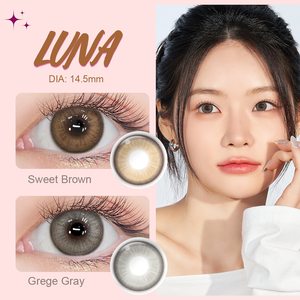
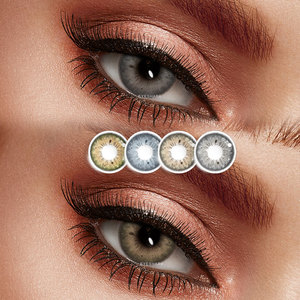
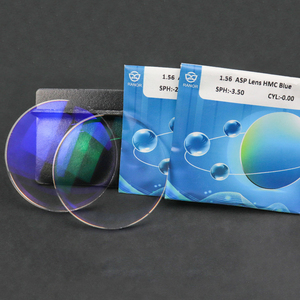
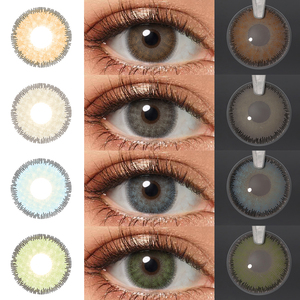
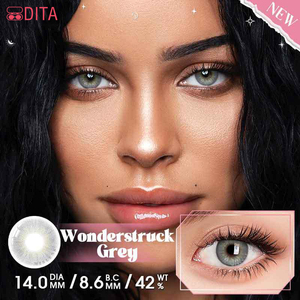
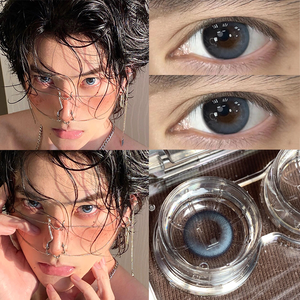
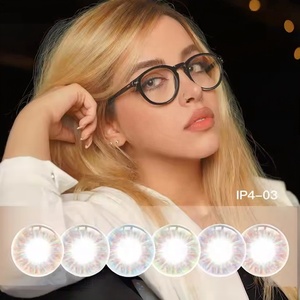
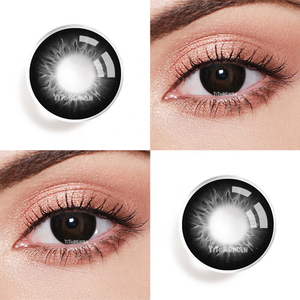
1. Technical Executive Summary & Enterprise Authority
The global demand for cosmetic contact lenses has transitioned from standardized spherical lenses to specialized optical correctors. Among these advanced medical devices, Toric Color Contact Lenses represent the pinnacle of optical engineering, catering to an estimated 47% of visual cosmetic consumers who suffer from varying degrees of astigmatism. Manufacturing high-precision toric colored contacts requires overcoming dual technological hurdles: achieving absolute rotational stability across the eye's corneal cylinder while maintaining vibrant, multi-tonal aesthetic pigmentation without compromising ocular physiology.
As a leading Chinese manufacturer and global exporter (operating under corporate standards including Med Lenses Technology Co., Ltd.), our centralized production infrastructure integrates high-precision lathe-cutting, fully automated cast molding, and dual-layer pigment micro-encapsulation. Operating under strict ISO 13485 quality management systems, our facilities produce over 5,000 unique aesthetic patterns across both spherical and toric parameters, supplying international beauty conglomerates, optometric distributors, and private label e-commerce brands across the United States, Europe, the Middle East, and Southeast Asia.
Core Technical Takeaway for B2B Importers: Unlike standard spherical colored lenses that rotate freely on the cornea, toric color lenses must remain locked at a specific axis angle (±5° tolerance). Off-axis rotation degrades visual acuity for astigmatic patients. Choosing a certified OEM partner with proven rotational stabilization tech is critical for brand retention and regulatory compliance.
Full Regulatory Alignment
Complete documentation packages for CE (MDD/MDR) and US FDA 510(k) file clearance support, reducing market-entry barriers for international importers.
Micro-Sandwich Pigmentation
Colors are locked within biocompatible HEMA-GMA hydrogel layers, eliminating direct contact between pigments and the corneal epithelium.
Prism Ballast & Dynamic Zones
Proprietary stabilization designs balance thickness profiles to prevent lens mis-rotation caused by blinking forces.
2. Engineering Toric Color Lenses: Stabilization & Optical Physics
To successfully correct astigmatism, a toric contact lens features two distinct powers: a spherical power to correct myopia or hyperopia, and a cylindrical power (CYL) oriented at a specific axis angle (AXIS) to correct uneven corneal curvature. If the lens rotates on the eye during blinking, the cylinder axis shifts, causing instant blurred vision.
Key Rotational Stabilization Architectures
Our OEM manufacturing lines employ three distinct stabilization mechanisms depending on target wear modalities (Daily Disposable, Monthly, or Yearly Replacement):
- 1. Modified Prism Ballast Technology: Incorporates a subtle mass gradient near the base of the lens (6 o'clock position). Gravity and palpebral pressure interact with the ballast to keep the CYL axis correctly aligned.
- 2. Dynamic Thin-Zone (Perimballast) Design: Reduces thickness at the top and bottom edge boundaries (12 o'clock and 6 o'clock). Upper and lower eyelids squeeze these thin zones during a blink, naturally guiding the lens back into alignment.
- 3. Accelerated Stabilization Design (ASD): Features four active stabilization zones positioned in the dual slopes of the lens contour. This minimizes thickness under the eyelids while leveraging eyelid pressure to quickly restore orientation within 2-3 blinks.
Technical Manufacturing Benchmark Matrix
Below is a standardized technical specification grid comparing our OEM Toric Color Contact production parameters with standard spherical cosmetic lenses:
| Optical Parameter | Standard Spherical Color Lens | High-Precision Toric Color Lens (Astigmatism) |
|---|---|---|
| Base Curve (BC) | 8.5mm - 8.7mm (±0.10mm) | 8.5mm - 8.6mm (±0.05mm Tight Tolerance) |
| Diameter (DIA) | 14.0mm - 14.5mm | 14.2mm - 14.5mm (Enlarged for Stabilization) |
| Sphere Power Range | 0.00D to -10.00D | 0.00D to -9.00D (0.25D / 0.50D Steps) |
| Cylinder Power (CYL) | N/A (Plano Cyl) | -0.75D, -1.25D, -1.75D, -2.25D, -2.75D |
| Axis Orientation Range | N/A | 10° to 180° (In 10° Increments, Axis Tolerance ±5°) |
| Water Content | 38% - 55% (HEMA / Hydrogel) | 42% - 58% (HEMA-GMA / Silicone Hydrogel) |
| Oxygen Permeability (Dk/t) | 15 - 25 Dk/t | 28 - 85 Dk/t (High-Dk Silicone Formulations) |
| Pigment Printing Tech | 1-3 Tone Dot Matrix | Double-Sided Sandwich Encapsulation Matrix |
3. Global Sourcing Trends & Technology Roadmap (2026–2030)
As an international B2B buyer or cosmetic brand strategist, staying ahead of technological inflections in contact lens manufacturing is essential to maintaining market share. Over the next five years, the global supply chain for toric color contacts is experiencing significant technical pivots:
1. Rapid Shift Toward Silicone Hydrogel (SiHy) Toric Matrices
While classic HEMA (Hydro-ethyl methacrylate) hydrogels dominate cost-effective seasonal cosmetic markets, high-tier markets in North America and Western Europe are demanding Silicone Hydrogel toric options. Silicone hydrogel delivers up to 4x greater oxygen transmissibility (Dk/t), drastically reducing corneal hypoxia risks during long wear. Our research and development center has successfully integrated 3D pigment trapping within high-Dk silicone polymers, combining comfort with vivid aesthetic transformations.
2. Rise of Daily Disposable Toric Color Lenses
Historically, toric color contact lenses were restricted to yearly or monthly wear cycles due to complex mold tooling costs. Advanced automated cast-molding systems now allow high-speed production of single-use daily disposable toric color contacts. Brands introducing daily toric color lines benefit from higher repeat-order frequencies, premium margin positioning, and superior wearer hygiene ratings.
3. Hyper-Natural Aesthetic Multi-Tonal Patterns
Consumers are moving away from opaque, single-tone block colors toward complex, multi-layered pupil dynamics. Modern trends favor 3-tone gradient prints, micro-sparkle metallic accents, and soft limbal ring definitions that mimic the natural iris structure while subtly correcting astigmatic focus.
4. Procurement FAQ: Sourcing Toric Color Contacts from China
We have collected and answered the most frequent technical, logistical, and compliance questions submitted by B2B buyers, distributors, and e-commerce brand managers.
5. Enterprise Manufacturing Excellence & Quality Control SOPs
Achieving defect rates below 0.05% requires strict adherence to automated manufacturing protocols. From monomers to finished sterile blisters, our production process includes multi-tier verification checks:
- Automated Cast Molding: High-precision optical molds ensure identical base curve radius and edge geometries across every batch.
- High-Resolution Digital Color Printing: Automated robotic printheads apply multi-layered aesthetic iris designs with precise registration to avoid eccentric misalignments.
- Full Automated Optical Inspection (AOI): Every single lens passes through high-speed camera systems to detect surface scratches, edge tearings, bubble inclusions, or color micro-variations.
- Sterilization & Bio-Burden Testing: Lenses undergo high-pressure steam autoclave sterilization at 121°C (250°F) followed by rigorous 14-day sterility incubation tests before batch release.
Ready to Expand Your Toric Color Contact Lens Brand?
Partner with China’s premier ISO 13485 certified manufacturer. Request factory-direct wholesale pricing, order sample kits, or start your private label production today.
Get a Quote