Featured Wholesale Contact Lens Collections
Direct Factory OEM/ODM Solutions Available for Global Distributors and Cosmetics Brands
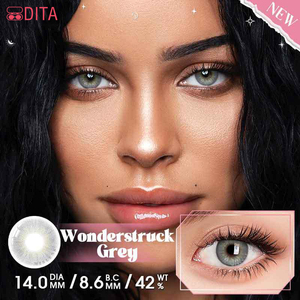
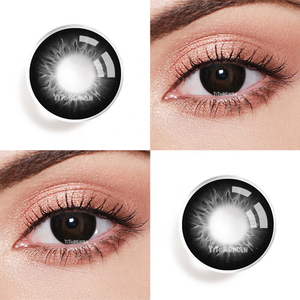
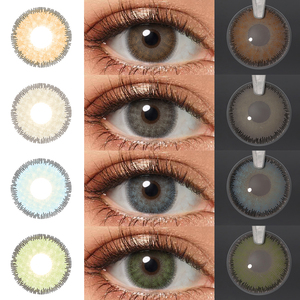
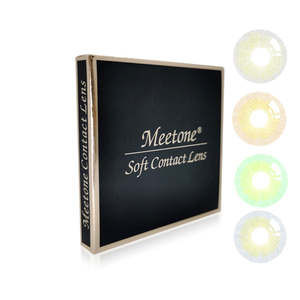
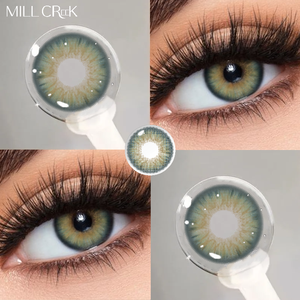
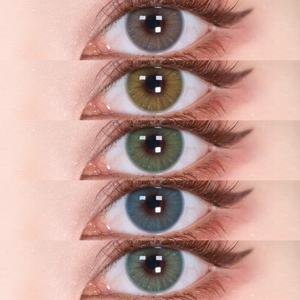
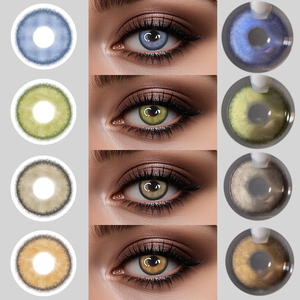
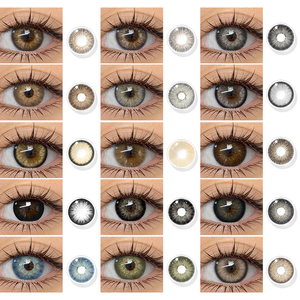
Executive Summary: Sourcing OEM/ODM Contact Lenses from China
The global contact lens market is undergoing a structural transformation driven by the convergence of cosmetic beauty trends, expanding optometric correction requirements, and advancements in polymer materials science. China has established itself as the world’s leading hub for contact lens manufacturing, blending high-speed precision cast-molding automation with flexible low-MOQ private label infrastructure. However, for B2B brand owners, medical device importers, and beauty e-commerce platforms, selecting the ideal China contact lens wholesale manufacturer requires navigating complex regulatory landscapes, polymer chemistry, bio-compatibility certifications, and pigment encapsulation technologies.
As a Class II and Class III medical device category in most global jurisdictions (such as the US FDA, EU MDR 2017/745, NMPA, and Saudi Food and Drug Authority), soft contact lenses cannot be evaluated as simple fast-moving consumer goods (FMCG). Product safety, optical accuracy (diopter power precision within ±0.25D), oxygen transmissibility ($Dk/t$), and edge-profile geometry directly dictate end-user physiological safety and brand equity.
Information Gain Insight: Modern contact lens manufacturing is no longer restricted to standardized clear corrective lenses. China's top-tier manufacturers utilize micro-encapsulation "sandwich" printing technology, locking pigment layers between bio-compatible poly-HEMA or hydrogel polymer layers. This eliminates direct dye contact with the corneal epithelium, delivering both intense visual aesthetic enhancement and uncompromised ocular safety.
This technical white paper serves as an authoritative procurement reference. It outlines the core engineering capabilities, material science advancements, production workflows, compliance matrices, and strategic procurement trends shaping the contact lens industry from 2026 through 2030.
Polymer Engineering: Hydrogel vs. Silicone Hydrogel Architecture
When selecting a contact lens supplier in China, purchasing directors must align polymer physical properties with their target customer demographics and wear schedules. The two dominant polymer categories in current high-volume manufacturing are Hydrogel (Poly-HEMA base) and Silicone Hydrogel (SiHy).
Poly-HEMA Hydrogel Formulations
Poly(2-hydroxyethyl methacrylate) remains the backbone of cost-effective cosmetic and corrective contact lenses. With a water content ranging from 38% to 55%, HEMA lenses deliver superior initial insertion comfort, excellent flexibility, and optimal color pigment stability for daily, monthly, and yearly replacement cycles.
Silicone Hydrogel (SiHy) Tech
Silicone Hydrogel integrates siloxane monomers into the polymer matrix, allowing oxygen to pass directly through the silicone chain rather than relying solely on water molecules. SiHy lenses achieve oxygen transmissibility rates ($Dk/t$) exceeding $80 \times 10^{-9}$, supporting extended wear and reduced corneal hypoxia.
Sandwich Color Lock Technology
High-precision manufacturing employs double-sided cast molding where pigment layers are micro-printed and enclosed between dual clear monomer matrices. This guarantees zero surface dye leaching, prevents friction against the palpebral conjunctiva, and maintains surface wettability.
| Material Parameter | Standard Hydrogel (Poly-HEMA) | Advanced Silicone Hydrogel (SiHy) | B2B Procurement Advantage |
|---|---|---|---|
| Water Content | 38% – 45% (Balanced) | 33% – 48% (Low water, high permeability) | Lower water content reduces end-of-day dehydration in air-conditioned environments. |
| Oxygen Transmissibility ($Dk/t$) | 15 to 25 Barrer/cm | 80 to 130+ Barrer/cm | SiHy is essential for premium healthcare positioning and extended daily wear compliance. |
| Modulus (Stiffness) | 0.30 – 0.45 MPa (Ultra-soft) | 0.60 – 1.10 MPa (Higher shape retention) | Lower modulus increases immediate handling comfort; higher modulus aids novice wearers. |
| Production Process | Full Automated Cast Molding | UV Curing & Extraction Cast Molding | Cast molding provides identical batch-to-batch edge profiles (±0.01mm variance). |
| Cost Profile (Unit Cost) | Highly Competitive / High Margin | Mid-to-Premium Grade | Hydrogel maximizes ROI for fast-fashion cosmetic lines; SiHy dominates clinical/medical lines. |
Future Procurement & Sourcing Trends (2026–2030)
As the international eye-care and cosmetic contacts sector evolves, global distributors must adapt their procurement models to match changing consumer habits and regulatory parameters. Working directly with top Chinese OEMs grants buyers immediate access to next-generation product innovation. Key market shifts include:
1. Dominance of Daily Disposables (1-Day Wear)
Global demand is shifting rapidly from annual and monthly replacement lenses toward 1-Day daily disposable colored contacts. Driven by heightened consumer awareness of ocular hygiene, daily disposables eliminate cleaning solutions, decrease infection risks, and yield higher recurring customer lifetime value (LTV) for brands.
2. Hyper-Natural Iris Mapping & 3D Multi-Tone Gradients
Monotone or harsh dark outer limbal rings are being replaced by subtle 3-tone and 4-tone gradient patterns. Utilizing high-resolution digital iris mapping, Chinese manufacturers replicate natural stromal fibers, hazel ring transitions, and soft radiance effects tailored specifically for natural coverage over dark brown irises.
3. Sustainable Packaging & Bio-Degradable Blisters
Environmental compliance is becoming a key evaluation criterion for European and North American importers. Leading factories are rolling out recyclable foil blister packs, reduced-plastic solution tray geometries, and eco-friendly paper box packaging for private label orders without compromising sterile barrier integrity.
Supply Chain Strategy: Leading B2B buyers are mitigating geopolitical and tariff risks by contracting with Chinese manufacturers that maintain fully automated production lines, in-house packaging lines, and ready-to-ship regional stock repositories. This structure enables rapid re-order turnarounds of under 14 days for custom private label artwork.
Product Category Development & High-Growth Segments
Building a high-converting product portfolio requires understanding regional style preferences and technical specifications across different usage scenarios:
1. Natural K-Beauty & Everyday Aesthetic Lenses (14.0mm to 14.2mm Diameter)
Designed primarily for daily wear, these lenses feature small graphic diameter sizes (G.DIA 13.0mm–13.4mm) and soft limbal boundaries. Colors such as Choco, Natural Gray, Hazel Nut, and Honey Brown command up to 65% of year-round repeat consumer volume across Asian and Western markets alike.
2. High-Coverage / High-Opacity Lenses for Dark Eyes (14.2mm to 14.5mm Diameter)
Dark brown and black natural eye colors require dense micro-pigment opacity to ensure vibrant color transformation. Advanced manufacturing utilizes multi-layer ink jetting with white undercoat matrix layering, enabling bright blues, vibrant greens, and icy grays to show clearly without iris bleeding.
3. Special FX, Cosplay, and Seasonal Halloween Contacts
Featuring full opacity coverages, solid whiteout, mesh blackout, cat-eye vertical pupil designs, and glowing UV-reactive pigments, costume contact lenses offer high profit margins during Q3 and Q4. Enterprise factories strictly apply Sandwich technology to special FX lines to prevent rough pigment surfaces from coming into contact with the eye.
4. Prescriptive Myopic & Toric Colored Lenses
Expanding beyond non-prescription cosmetic lenses (0.00 diopter), leading manufacturers offer prescription color contacts ranging from -1.00D to -8.00D in 0.25D or 0.50D increments. Offering corrective powers increases brand authority and establishes customer trust for long-term reorders.
Quality Control, Certification Matrices & Factory Infrastructure
Global regulatory compliance represents the highest barrier to entry in the contact lens trade. Importers are legally accountable for selling cleared medical products in their respective territories. A top-tier China contact lens manufacturer maintains rigorous quality management systems at every stage of the manufacturing workflow:
Class 100,000 Cleanroom Operations
Molding, hydration, inspection, and primary blister sealing take place inside positive-pressure GMP cleanrooms certified to ISO 14644-1 Class 8 / Class 100,000 standards, preventing airborne particle contamination.
Automated Optical Inspection (AOI)
High-resolution camera sensors inspect 100% of manufactured lenses for edge tears, surface bubbles, foreign matter, center thickness deviations, and concentric color offset before steam autoclaving.
International Audit Readiness
Factories operating under ISO 13485 provide full Technical Documentation File (TDF) access, biocompatibility testing reports (ISO 10993 cytotoxicity, systemic toxicity, sensitization), and sterilization validation data.
Regulatory Advisory: Prior to placing bulk orders, request certificate verification for CE Marking under EU MDR 2017/745, US FDA 510(k) establishment registration numbers, and ISO 13485 audit reports to ensure uninterrupted customs clearance in target destination ports.
Enterprise Edge: Full-Service Private Label & OEM/ODM Solutions
As a leading contact lens manufacturing group in China, our integrated supply ecosystem provides B2B clients with an end-to-end launch platform designed for rapid speed-to-market, strict quality control, and high margins:
1. Low MOQ & Flexible Starter Procurement
We lower the barrier for cosmetic brands and boutique optical importers. In-stock wholesale orders start from as low as 100 pairs total (mixed designs), while custom private label packaging projects begin at just 1,000 pairs.
2. 5,000+ Existing Lens Design Library
Access our extensive catalog of proven iris patterns, natural color gradients, graphic diameters, and corrective power ranges without incurring initial R&D molding fees.
3. Complete Private Label Box & Packaging Customization
Our in-house packaging department designs custom paper boxes, blister foils, instruction leaflets (IFUs), vial labels, and barcoding compliant with GS1 and international labeling directives.
4. Streamlined 4-Step Sourcing Workflow
- Step 1: Selection & Sampling: Choose from our design catalog or provide custom target colors; receive physical sterile samples within 7 business days.
- Step 2: Packaging Artwork Approval: Finalize brand artwork on provided dielines with strict color matching (Pantone PMS control).
- Step 3: Precision Production & Sterilization: Cast molding, hydration, AOI camera inspection, foil sealing, and 121°C terminal steam sterilization.
- Step 4: Quality Release & Global Shipping: Batch release testing, CoA issuance, export documentation, and door-to-door air/sea logistics coordination.
Frequently Asked Questions (FAQ) for B2B Importers
What is the typical Minimum Order Quantity (MOQ) for wholesale and private label orders?
Wholesale orders of our ready-to-ship catalog start at just 100 pairs total, with low per-design minimums allowing you to test multiple colorways. Custom private label packaging projects (your own box design, branded blister packaging, custom IFU leaflet) start at 1,000 pairs.
Are your contact lenses compliant with US FDA, CE MDR, and international medical device standards?
Yes. Our manufacturing facilities operate strictly under ISO 13485 Quality Management Systems. We provide technical documentation support, Certificate of Analysis (CoA), ISO 10993 bio-compatibility reports, and CE/FDA registration documentation assistance for eligible lens series depending on your target destination market.
How does Sandwich Micro-Encapsulation Technology protect the wearer's eyes?
Sandwich printing embeds the color pigment layer between two layers of clear hydrogel (Poly-HEMA) monomer. This prevents the pigment from touching the cornea or conjunctiva directly, eliminates dye migration risks, and ensures a smooth outer lens surface that maintains tear-film stability and all-day comfort.
What replacement cycles and water content levels are available for wholesale?
We supply 1-Day Daily Disposables, 1-Month Replaceable, and 1-Year Long-Wear lenses. Water content options range from 38% (optimized for dry eyes and low ambient humidity) to 55% (offering ultra-soft initial insertion feel), available across standard diameter ranges of 14.0mm to 14.5mm with an 8.6mm base curve.
Can you supply prescription strength (myopic) colored contact lenses?
Yes. We offer both plano (0.00 diopter) cosmetic lenses and prescription corrective colored contact lenses ranging from -1.00D to -8.00D. Power ranges can be mixed within wholesale orders to accommodate diverse consumer demand.
What is the production lead time for sample validation and bulk private label orders?
In-stock catalog samples ship within 2 business days. Custom sample prototyping takes approximately 7–10 days. Bulk production for custom private label orders typically completes within 25 to 35 days, inclusive of automated optical inspection, blister filling, steam sterilization, and final QA release.
How do you ensure color consistency across different production batches?
We utilize automated spectrophotometric color matching and high-precision digital printing matrices. Every ink formulation is recorded in our ERP system, ensuring batch-to-batch color variation stays below $\Delta E < 1.0$, which is imperceptible to the human eye.
What packaging options are available for OEM contact lens clients?
We provide sterile PP blister packs and glass vials as primary packaging. Secondary packaging includes custom printed paper boxes, metallic foil boxes, multi-pack sleeves, starter kit cases, and localized multi-language instruction manuals (IFUs).