Featured Commercial Product Lineup
Direct factory supply for global optics buyers, cosmetic brands, and cosplay specialty distributors. Certified manufacturing under ISO 13485 and CE standards with low MOQ parameters.
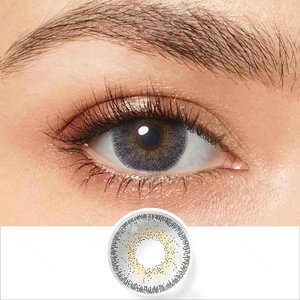
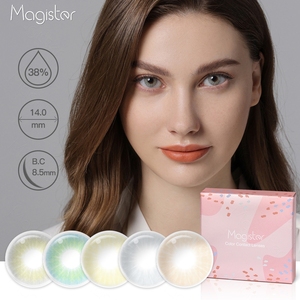
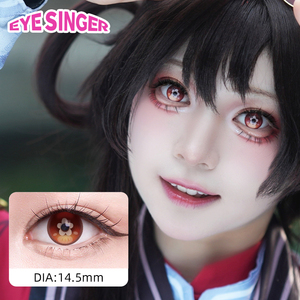
Strategic Industry Analysis: Sourcing Blind & Special Effects Contact Lenses from China
The global market for specialized cosmetic contact lenses—specifically blind effect contact lenses, mesh cosplay lenses, and high-opacity theatrical optics—has evolved from a seasonal niche into a year-round driver of cosmetic revenue. Professional procurement officers, medical device importers, and ocular cosmetic distributors seeking OEM/ODM manufacturing partnerships in China must evaluate vendors beyond simple unit costs. True competitive advantage is achieved through technical precision, pigment safety protocols, polymer hydration physics, and international regulatory readiness.
This technical whitepaper provides B2B buyers with an authoritative analysis of China's contact lens manufacturing landscape, highlighting pigment encapsulation engineering, oxygen transmissibility ($D_k/t$), surface friction dynamics, and strategic procurement frameworks for 2025–2030.
1. Structural Physics & Optical Engineering of Blind Lenses
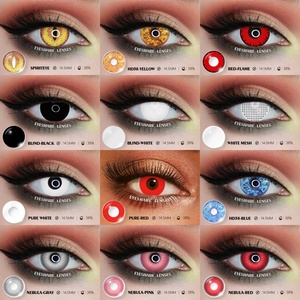
Blind contact lenses are designed to completely obscure or dramatically alter the natural iris and pupil structure. Unlike standard 1-to-3 tone natural cosmetic lenses that feature a clear central optical zone ($5.0\text{ mm}$ to $6.0\text{ mm}$ pupil aperture), blind contact lenses utilize two distinct technical methodologies:
- Micro-Perforated Mesh Technology: Fine dot-matrix patterns leave micro-apertures across the pupil area. This creates the visual illusion of a completely opaque pupil (whiteout, red-out, or blackout) to an external observer, while allowing reduced ambient light to reach the retina. Wearers maintain partial visual orientation suitable for photoshoots, theatrical performance, and conventions.
- Solid Opaque Pupil Lenses (Zero-Sight): Solid blind white or blind black lenses completely cover both the iris and optical center with solid pigment layers. These lenses offer 100% opacity for intense cinematic or studio applications where zero natural pupil exposure is mandatory. Visual acuity is blocked, necessitating strict safety disclaimers and timed wearing limits.
Precision manufacturing in Chinese optical centers utilizes Lathe-Cutting (Cast-Molding) hybrid automation. This guarantees that base curves (typically $8.5\text{ mm}$ to $8.8\text{ mm}$) remain stable under high pigment loads without inducing structural warpage or uneven rim pressure on the cornea.
Technical Specifications Matrix for B2B Procurement
When placing OEM/ODM white label orders, technical parameters must be strictly defined within purchase agreements. Below is the standard engineering baseline provided by top-tier Chinese contact lens manufacturers:
| Technical Parameter | Standard Hydrogel Line (HEMA) | Advanced Silicone Hydrogel Line | Cosplay / SFX Special Effect Line |
|---|---|---|---|
| Base Curve (BC) | 8.50 mm – 8.60 mm (±0.05 mm) | 8.60 mm – 8.70 mm (±0.03 mm) | 8.60 mm (Standard Universal Fit) |
| Diameter (DIA) | 14.0 mm – 14.2 mm | 14.1 mm – 14.5 mm | 14.2 mm – 14.5 mm (Enlarging effect) |
| Water Content | 38% – 42% (Low dehydration) | 45% – 55% (High comfort) | 38% (Optimized for pigment hold) |
| Oxygen Transmissibility ($D_k/t$) | $15 \times 10^{-9} \text{ (cm/s)(mL O}_2\text{/mL}\cdot\text{mmHg)}$ | $85 - 110 \times 10^{-9}$ units | $12 - 18 \times 10^{-9}$ units |
| Center Thickness | 0.07 mm – 0.09 mm (-3.00D) | 0.08 mm (High tear-resistance) | 0.08 mm – 0.10 mm (Layered pigment) |
| Color Layering Tech | Triple Sandwich Encapsulation | Internal Matrix Embedding | Dual-Layer Mesh Sandwich |
| Sterilization Standard | Moist Heat Autoclave $121^\circ\text{C}$ / 30 mins | Moist Heat Autoclave $121^\circ\text{C}$ / 30 mins | Moist Heat Autoclave $121^\circ\text{C}$ / 30 mins |
2. Pigment Safety: The "Sandwich" Color Encapsulation Technology
The primary quality risk in low-grade color contact lenses is direct contact between active pigment colorants and the corneal epithelium. Substandard manufacturing prints color directly onto the lens surface, leading to dye leaching, increased surface roughness, micro-abrasions, and severe ocular inflammation.
Leading Chinese manufacturers enforce 3-Layer Sandwich Encapsulation. In this process, biocompatible FDA-approved pigments (such as iron oxides, titanium dioxide, and phthalocyanine green) are printed onto a base hydrogel layer. A secondary clear polymer monomer layer is then chemically cross-linked directly over the color layer. The pigment is permanently locked within the inner core of the lens polymer matrix. Neither the eye tissue nor tear fluids ever touch the raw color particles.
3. Global Market Compliance & Quality Certifications
Contact lenses are classified as Class II or Class III medical devices across major regulatory jurisdictions. Navigating customs clearance and market insertion requires robust documentation from your Chinese manufacturing partner:
- ISO 13485:2016 Certification: Specifies comprehensive quality management systems for medical device production, cleanroom environment controls (Class 100,000 / ISO Class 8), and batch traceability.
- CE Marking (EU MDR Compliance): Necessary for distribution within the European Economic Area under Medical Device Regulation (EU) 2017/745.
- US FDA 510(k) Clearance: Cosmetic and corrective contact lenses imported into the United States require 510(k) premarket notification approval and compliance with 21 CFR Part 820 quality systems.
4. Strategic Sourcing Trends & Technology Roadmap (2025–2030)
The OEM contact lens supply chain in China is undergoing a massive transformation driven by automation, material science, and consumer demand dynamics:
- Shift to Silicone Hydrogel Polymers: While traditional HEMA (2-hydroxyethyl methacrylate) dominates low-cost lines, next-generation blind and color lenses are transitioning to silicone hydrogel formulations. This dramatically increases oxygen permeability ($D_k/t$), allowing longer wearing comfort without corneal hypoxia.
- On-Demand Micro-Batch OEM Manufacturing: Advanced pad-printing machinery and digital laser alignment allow suppliers to offer flexible OEM branding. Startups and beauty brands can launch custom-packaged private label collections with minimum initial orders starting at just 1,000 pairs.
- Automated Vision Systems (100% Inspection): High-speed industrial camera inspection systems scan 100% of finished lenses for edge tears, concentricity errors, surface debris, and pigment voids prior to primary blister sealing.
Why Partner with Leading Chinese Lens Manufacturers?
End-to-end capabilities designed to minimize supply chain risk and maximize private label profit margins.
Triple Factory Capacity
Production distributed across 3 specialized cleanroom facilities mitigates seasonal bottleneck risks during peak Q3/Q4 cosplay demand cycles.
Biocompatible Pigment Guarantee
100% enclosed sandwich printing prevents pigment-cornea contact, maintaining ultra-smooth surface friction coefficient (<0.05).
Turnkey OEM Packaging
From sterile polypropylene blister trays and aluminum foil caps to custom artwork printing and multi-lingual user instruction leaflets.
Frequently Asked Sourcing & Technical Questions (FAQ)
Essential guidance for commercial buyers, importers, and private label brand managers.
Can users see clearly through blind contact lenses?
Mesh blind lenses feature micro-perforated dot patterns that allow partial light transmission, allowing wearers basic visual orientation. Solid blind white/black lenses offer 100% pigment coverage with zero optical visibility, recommended strictly for photoshoots or stage performances where visibility is sacrificed for total visual effect.
What is the typical Minimum Order Quantity (MOQ) for wholesale & private label?
Wholesale stock orders of existing collections start at just 100 pairs total (mixed designs). Custom OEM private label projects featuring bespoke packaging, logo design, and custom box printing typically start at 1,000 pairs per design variant.
Are Chinese contact lens manufacturers compliant with US and European standards?
Yes. Top-tier factory partners operate strictly under ISO 13485 quality systems and provide technical dossiers supporting CE marking (EU MDR) and US FDA 510(k) registrations. Buyers are encouraged to request technical files and sterile test reports during vendor vetting.
Why is a 38% water content favored for heavy costume & blind lenses?
Lenses with 38% water content absorb less tear film throughout the day, preventing rapid on-eye dehydration in climate-controlled environments. Lower hydration also ensures greater structural stability for complex, heavy pigment layers without shape deformation.
How are product samples ordered and evaluated prior to bulk production?
Sample packs can be dispatched via express carrier within 3–5 business days. Optical laboratories evaluate sample lots for edge smoothness, base curve retention, tear strength, color consistency across lighting conditions, and saline pH stability.
What is the total lead time for custom private label orders?
Standard OEM production lead time is approximately 25 to 35 calendar days following artwork approval and sample sign-off. Stock wholesale orders ship within 48 to 72 hours.
Launch Your Private Label Contact Lens Brand Today
Connect directly with our senior optical engineers and international supply coordinators. Receive factory pricing, compliance documentation, and physical sample kits tailored to your region.
Contact Us