CE Certified Mesh & Decorative Lens Portfolio
Explore our export-ready contact lens collections engineered with micro-perforated visual clarity matrices and non-prescription soft hydrogel technology.
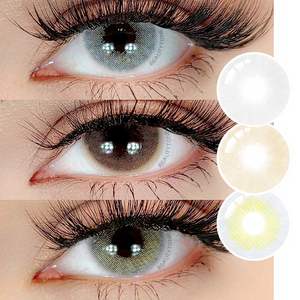
Colored Contact Lenses Wholesale Non Prescription Soft Lens Custom Packaging
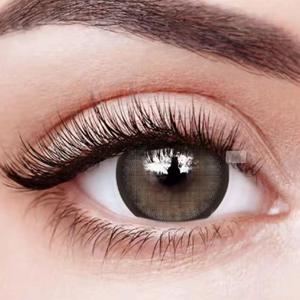
Soft Natural HEMA Material Two Pieces Brown Colored Contact Lenses
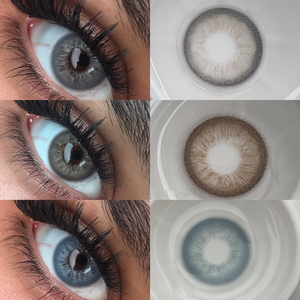
Natural Color Contact Lenses Prescription Power Plano to 8.00 Soft Contacts
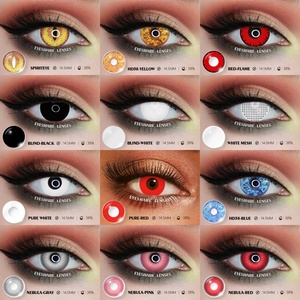
Halloween Cosplay Color Red Mesh Contact Lenses Crazy Design Lens
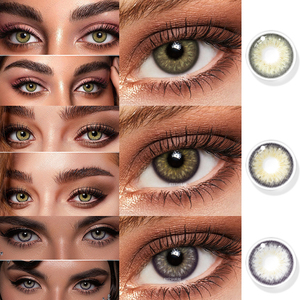
Soft Three Tone Natural Colored Prescription Contact Lenses
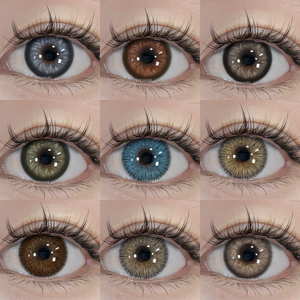
Wholesale Colored Contact Lenses with Travel Case for Eye Makeup & Cosplay
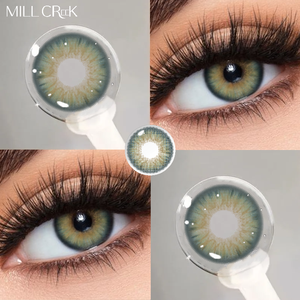
Korean Style Natural Colored Contact Lenses 14.2mm Soft Circle Lenses OEM
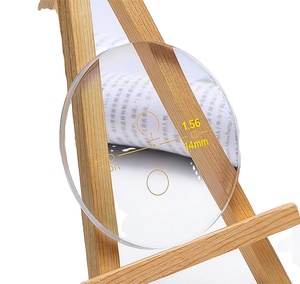
Wholesale 1.56 Optical Blue Cut Block Eyeglasses Progressive Lenses
1. Technical Architecture of CE Certified Mesh Contact Lenses
In the global cosmetic contact lens sector, Mesh Contact Lenses (often designated as grid contact lenses, blind-effect lenses, or screen-printed theatrical matrices) represent one of the most technically demanding segments for OEM/ODM manufacturers. Unlike conventional opaque cosmetic lenses that utilize continuous dot-matrix patterns to alter iris color, mesh contact lenses rely on micro-perforated spatial geometry. This grid architecture covers both the iris and the pupil region while allowing ambient light to pass through tiny unprinted micro-apertures, granting the wearer translucent peripheral vision while rendering a solid or patterned aesthetic to an external observer.
From an engineering perspective, manufacturing a CE-compliant mesh contact lens under Medical Device Regulation (EU MDR 2017/745) requires stringent control over three primary parameters: Optical Aperture Density (OAD), Pigment Encapsulation Layering, and Oxygen Transmissibility ($Dk/t$). Standard hydrogel materials (such as Poly-HEMA) modified with high water retention monomers (38% to 55% $H_2O$) serve as the base matrix. Achieving a balance between external color opacity and internal visual clearance is achieved by etching microscopic mesh grids—typically ranging between 80 to 150 microns per perforation—directly into the hydrogel sub-layer.
Engineering Insight: The Bio-Sandwich Encapsulation Protocol
Uncertified decorative lenses often apply pigments directly to the surface of the lens material, exposing the corneal epithelium to potential dye migration and mechanical abrasion. As a CE Certified Manufacturer, our facility employs Micro-Encapsulated Bio-Sandwich Technology. The biocompatible mesh pigment layer is embedded between two ultra-thin layers of purified HEMA polymer, ensuring zero direct contact between raw pigments and ocular tissues while retaining a smooth base curve (8.5mm - 8.7mm) and edge profile.
Micro-Grid Spatial Ratio
Precision-calculated grid density (up to 120 lines/inch) balances maximum external color saturation with functional wearer visibility for theatrical and retail use.
Stable Oxygen Transmissibility
Engineered hydrogel formulation ensures an oxygen flux coefficient ($Dk/t \ge 15-25 \times 10^{-9}$) suitable for safe daily wear schedules without inducing hypoxic corneal edema.
CE MDR Class IIa Certification
Full compliance with European Union Medical Device Regulations, backed by ISO 13485:2016 Quality Management System auditing and technical dossiers.
2. Technical Specifications & Material Benchmarks
B2B optical buyers, pharmaceutical distributors, and cosmetics brand managers must verify precise physical and chemical metrics prior to committing to OEM or private-label bulk procurement. Below is the standard technical matrix for our CE-certified mesh contact lens production lines:
| Technical Parameter | Standard Specification (Poly-HEMA) | Premium Silicone Hydrogel Line | Compliance Standard |
|---|---|---|---|
| Material Composition | HEMA / NVP Copolymer | Filcon V / Silicone Hydrogel | ISO 18369-2 |
| Water Content | 38% - 42% | 45% - 48% | ISO 18369-4 |
| Base Curve (BC) | 8.50mm - 8.70mm (±0.20mm) | 8.60mm (Custom Available) | ISO 18369-3 |
| Diameter (DIA) | 14.0mm - 14.5mm | 14.2mm - 14.8mm (Scleral Mesh) | ISO 18369-3 |
| Center Thickness | 0.08mm @ -3.00D (±0.02mm) | 0.07mm @ -3.00D | ISO 18369-3 |
| Oxygen Permeability ($Dk$) | 8.5 - 11.0 $\times 10^{-11}$ | 80.0 - 110.0 $\times 10^{-11}$ | FATT / Polarographic |
| Modulus / Softness | 0.30 - 0.45 MPa | 0.50 - 0.65 MPa | ASTM D882 |
| Color Encapsulation | Double Lathed Bio-Sandwich | Triple Micro-Layer Coated | Cytotoxicity ISO 10993-5 |
| Sterilization Method | Moist Heat Autoclave (121°C) | Moist Heat Autoclave (121°C) | ISO 17665-1 |
3. Market Evolution & Future B2B Procurement Trends (2025–2030)
The global market for decorative and specialty contact lenses is transitioning from a seasonal costume accessory niche into a high-margin sub-category of direct-to-consumer beauty, influencer cosmetics, and professional theatrical supplies. Sourcing directors must align their supply chains with key technological and regulatory shifts currently sweeping the industry:
Shift to Daily Disposable Mesh Lenses
While annual and monthly replacement cycles dominated legacy wholesale channels, consumer demand is rapidly gravitating toward 1-Day Disposable Mesh Lenses. Daily wear minimizes keratitis risks, eliminates cleaning compliance issues, and increases repurchase frequency for brand owners.
Next-Gen Silicone Hydrogel Matrices
Traditional poly-HEMA mesh lenses restricted prolonged wear due to lower oxygen transmissibility. Future procurement mandates high-$Dk$ silicone hydrogel polymers that allow up to 8-12 hours of safe continuous wear during film production, cosplay conventions, and theatrical performances.
Tightening Regulatory Oversight (UDI & EUDAMED)
Importers into the EU, Middle East, and North America face aggressive customs inspections regarding Unique Device Identification (UDI) traceability. Compliant manufacturers must supply direct batch validation, EUDAMED registration data, and certified sterilization logs with every shipment.
4. Enterprise Manufacturing & Private Label Capabilities
As a specialized manufacturer and global exporter of contact lenses, our production infrastructure is custom-built to support scaling beauty brands, optical chains, and regional wholesale importers. We streamline product commercialization from initial design concept to final localized retail packaging.
End-to-End OEM & ODM Customization
Access our library of 5,000+ matrix patterns or submit proprietary mesh artwork. We support custom base curves, specific diameter tailoring, and exact pigment color matching (Pantone matching system).
Turnkey Private Label Packaging
Complete custom packaging solutions including medical-grade sterile PP blisters, glass vials, secondary artwork boxes, multi-language IFU (Instructions for Use) leaflets, and barcode/UDI serialization printing.
Quality Control & Regulatory Support
Every production batch undergoes 100% automated optical inspection for surface flaws, edge profile validation, zero-leak testing, and bio-burden assay verification to simplify local market registration.
Procurement FAQ: Technical & Regulatory Compliance
Direct technical answers to common queries raised by international optical buyers, regulatory managers, and B2B sourcing executives.