0%

Choosing the right Three Tone Color Contact Lenses requires more than comparing attractive product photos. Wholesale buyers must evaluate comfort-related specifications, color consistency, packaging quality, and regional compliance before placing large orders. A lens that looks vivid in studio lighting may appear softer under daylight. That difference matters.

This guide reviews ten popular styles for wholesale consideration. Each option should be assessed through documented product information, not appearance alone. Check the base curve, diameter, water content, material, power range, shelf life, and available packaging formats. Confirm that the supplier provides traceable lot numbers, clear instructions, and relevant quality certificates. Requirements differ between markets, so buyers should consult local regulators and licensed eye-care professionals before distribution.

Practical testing helps.

Request samples from the same production batch. Inspect the blister seals, printed expiry dates, color density, and labeling accuracy. Ask whether the manufacturer supports private labeling, mixed designs, and repeat orders. Reliable suppliers should answer specific questions without making unsupported comfort or safety promises. Their communication history also reveals important habits, especially when timelines change.

A beautiful sample can still fail a quality review. Our comparison is useful, but not flawless. Customer preferences, prescription needs, and legal standards vary widely. Treat this list as a purchasing framework, then verify every critical detail independently. With careful sourcing, transparent documentation, and realistic market testing, wholesale buyers can select Three Tone Color Contact Lenses that better match their customers and business requirements.
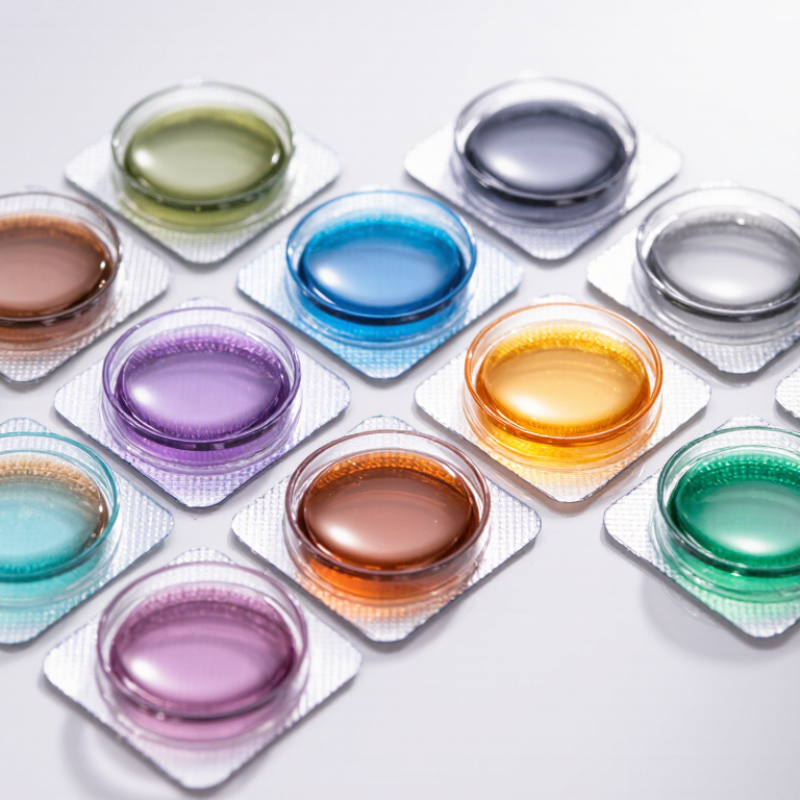
Top 10 Three Tone Color Contact Lenses for Wholesale Buyers

What Three-Tone Color Contact Lenses Are and How They Work

Three-tone color contact lenses create a layered iris effect with three coordinated shades. Usually, a darker outer ring frames the eye. A mid-tone shapes the main iris pattern. Small inner accents add depth near the pupil. The lens does not change the natural iris directly. Its printed tint changes how light reaches the observer’s eye. When the pattern aligns with the pupil, the result can look softer and more dimensional. Fit still matters. A beautiful print cannot correct an unsafe base curve.

For wholesale buyers, understanding construction helps evaluate samples. Check the lens material, water content, diameter, base curve, pigment placement, and specified wearing period. Ask for verifiable quality documents and traceable batch information. The pupil zone should remain clear in normal lighting. Poor registration may create blurred edges or uneven color. Studio photos can hide these flaws. Request close-up images and real-eye samples. Even then, color varies with lighting and natural iris tone. Results are not perfectly predictable.

Tips: Compare three-tone samples on different eye colors, not only printed charts. Confirm packaging, labeling, prescription options, and local regulatory requirements before ordering. Require fitting guidance from a qualified eye-care professional. Never treat lenses as ordinary cosmetics. Clean hands are essential. Sharing lenses is unsafe. If redness, pain, or blurred vision appears, remove the lens and seek eye-care advice. Comfort depends on fit, not color alone. Recheck supplier claims; attractive wording is not evidence.

Key Features Wholesale Buyers Should Compare

Wholesale buyers should compare three-tone contact lenses beyond their color charts. Grand View Research estimates the global contact lens market reached about USD 9.7 billion in 2023. This growth increases competition, but visual appeal alone does not guarantee repeat orders. Check the base curve, diameter, water content, and oxygen permeability. These specifications influence comfort during extended daily wear. Ask for batch samples, not only catalog images. A lens may appear vivid online, yet look flat under retail lighting.

Color blending also deserves close inspection. Three tones should create a natural limbal effect without harsh rings or uneven pigment. Compare the inner, middle, and outer color transitions under daylight and warm indoor light. FDA guidance emphasizes proper fitting, hygiene, and professional oversight for contact lenses. Wholesale packaging should therefore include clear specifications, traceability, care instructions, and usable expiry information. Do not overlook production consistency. A beautiful first sample means little if the next batch shifts noticeably.

Tips: Request samples from at least two production batches. Measure printed diameter against the stated size. Test comfort with qualified wearers, not staff alone. Review defect rates, replacement policies, minimum order quantities, and lead times. Keep written records. Small differences matter. I would also challenge overly high water-content claims, because comfort depends on several factors, not one number. A 2024 market report from IMARC places continued growth on personalization and cosmetic demand, making reliable color consistency a practical retail advantage.

Top 10 Three Tone Color Contact Lenses for Wholesale Buyers

Key specification ranges wholesale buyers should compare before selecting three-tone cosmetic lens styles.

The chart compares commonly listed soft cosmetic lens dimensions: overall diameter, graphic diameter, and base curve. These reference values reflect ranges frequently used in the category; buyers should verify the exact prescription, material, replacement cycle, water content, packaging, and regulatory documentation for every SKU.

Top Ten Three-Tone Lens Styles by Color and Visual Effect

For wholesale buyers, three-tone lenses should be compared by color structure and visual effect. The ten leading styles include honey hazel, olive green, ash gray, ocean blue, smoky brown, violet gray, amber green, silver blue, cocoa hazel, and ice gray. Each style uses a base shade, a blended middle tone, and a defined outer ring.

Honey hazel creates warm, softly enlarged eyes. Olive green looks natural with earthy depth. Ash gray gives a cool, refined finish. Ocean blue creates a brighter, clearer appearance. Smoky brown offers gentle definition for daily wear.

Violet gray adds a muted, editorial mood. Amber green produces lively contrast around dark pupils. Silver blue looks crisp under studio lighting. Cocoa hazel feels rich and approachable. Ice gray delivers the strongest visual change, but it may appear less natural.

Color performance depends on iris depth, lighting, and lens opacity. A shade chart can mislead. Wholesale buyers should request samples across several eye colors. Check edge clarity, color consistency, comfort feedback, and packaging accuracy. Soft gradients usually appear more realistic than harsh rings, while stronger patterns attract fashion-focused customers.

I have seen attractive samples fail during batch comparison. Small tone shifts can change the entire effect. Buyers should review production records, material details, prescription options, and local compliance requirements. A reliable supplier should provide clear specifications and repeatable quality, not just impressive photographs. Hydration claims also need evidence. They should never replace professional fitting advice.

Material, Safety, Prescription, and Compliance Requirements

Top 10 Three Tone Color Contact Lenses for Wholesale Buyers

Material and safety should guide every wholesale decision. Hydrogel and silicone hydrogel lenses differ in oxygen transmission, water content, stiffness, and deposit behavior. Ask suppliers for material specifications, oxygen permeability, water content, and test results. ISO 18369 outlines contact lens terminology, tolerances, and testing methods. It is useful, but not a substitute for local approval. FDA classifies contact lenses as medical devices, including many cosmetic lenses.

Prescription control needs practical discipline. Every order should record power, base curve, diameter, replacement schedule, and prescription status. Plano lenses still require professional fitting in many markets. Verify prescription documents through licensed eye-care channels. Never accept unclear measurements. A colorful lens can hide poor centration or edge movement. Buyers should request sample-lot testing, packaging records, sterility evidence, and stability data before large orders.

Compliance also depends on the destination country. Requirements may involve registration, labeling, importer details, traceability, and post-market reporting. The European Union uses medical-device conformity requirements, while other regions apply different pathways. CDC surveillance published in MMWR reported that 99% of surveyed lens wearers had practiced at least one risky hygiene behavior. That finding deserves attention during product training. Include clear care instructions and warning labels. I would also review supplier audits personally; certificates can be current, yet production controls may still vary. Safety claims need evidence, not attractive color charts.

How to Evaluate Suppliers, Pricing, and Bulk Order Terms

When comparing three tone color contact lens suppliers, start with evidence, not attractive photos. Request product samples, material specifications, manufacturing records, and current quality certificates. Check whether the supplier can provide traceability for each lot. A reliable partner should explain how lenses are inspected, packed, and stored before shipment. Ask for documentation required in your target markets. Local rules may differ, so confirm authorization independently.

Pricing needs a wider view than the unit quote. Compare sample fees, mold charges, packaging costs, testing fees, and shipping terms. A low price can hide expensive defects. Review the quotation line by line. For bulk orders, ask about minimum quantities, deposit percentages, production times, and balance payment schedules. Clarify whether color changes affect the minimum order quantity. Get all details in writing.

Order a small trial batch before committing to a large volume. Examine color consistency under daylight, package sealing, labeling accuracy, and carton strength. Keep inspection photos and batch records. Ask how defective units are replaced and who pays for related freight. Some suppliers offer flexible terms but communicate poorly after payment. That matters. I have found that fast replies do not always indicate dependable production. My own evaluation can also be imperfect, especially when forecasts change. Recheck demand before ordering deeply, and leave room for delayed customs clearance or seasonal sales fluctuations.

FAQS

What are three-tone color contact lenses?

They use three coordinated shades to create a layered iris appearance. A darker ring frames the eye. A middle shade forms the main pattern. Small inner accents add depth near the pupil.

How do three-tone lenses change the eye’s appearance?

Their printed tint changes how light reaches the observer’s eye. The natural iris remains unchanged. When the pattern aligns well, the eyes may look softer and more dimensional. Results still vary.

Which colors create natural-looking effects?

Honey hazel, olive green, smoky brown, and cocoa hazel often appear gentle. Soft gradients usually look more realistic than harsh rings. Natural iris color changes the final result. Printed charts can mislead.

Which styles create stronger visual changes?

Ice gray, ocean blue, silver blue, and amber green can look more noticeable. They may create brighter contrast around the pupil. Violet gray gives a muted fashion effect. The strongest effect may look less natural.

What should wholesale buyers check in samples?

Check material, water content, diameter, base curve, and wearing period. Inspect pigment placement and pupil clarity. Look for blurred edges or uneven color. Close-up images help.

Why is lens fit important?

Fit affects comfort, vision, and safety. A beautiful printed pattern cannot correct an unsuitable base curve. Professional fitting guidance is important. Color alone proves nothing.

How should suppliers and bulk orders be evaluated?

Request samples, material details, quality documents, and traceable batch information. Review minimum quantities, deposits, production times, and shipping terms. Check packaging seals, labels, and carton strength. Get every promise in writing.

Should buyers place a large order immediately?

No. Order a small trial batch first. Compare colors in daylight and on different eye colors. Keep inspection photos and batch records. A low price may hide costly defects. My own forecast could still be wrong.

Conclusion

Three Tone Color Contact Lenses combine three coordinated shades to create a more dimensional, blended, and natural-looking eye effect. This guide explains how the inner, middle, and outer color zones work together, then compares ten popular styles by tone and visual result, including soft enhancement, vivid contrast, enlarging effects, and subtle everyday looks. Wholesale buyers will learn which features matter most, such as color consistency, opacity, edge design, comfort, packaging quality, and suitability for different prescriptions.

The article also highlights essential requirements for lens material, eye safety, labeling, prescription options, quality control, and compliance with applicable regulations in the target market. It concludes with practical advice for evaluating suppliers, including production capability, sample testing, documentation, communication, minimum order quantities, pricing transparency, lead times, payment terms, and after-sales support. These criteria can help buyers select reliable products and build a safer, more competitive wholesale assortment.

Ethan

Ethan

Ethan is a dedicated marketing professional with a strong understanding of the company’s products, customers, and evolving market needs. Through a combination of industry knowledge, strategic thinking, and clear communication, he helps present complex product information in a practical and......