Choosing the Best China Private Label Contact Lenses Supplier requires more than comparing prices or browsing polished product pages. It requires evidence, careful questions, and practical experience.
Private Label Contact Lenses are medical devices, not ordinary fashion accessories. Dr. Lyndon Jones, a respected contact lens researcher and director of the Centre for Ocular Research & Education, has stated, “Contact lenses are medical devices, and they need to be treated as such.” That principle should guide every supplier decision, from material selection to post-market support.
A reliable manufacturer should explain its production controls clearly. Look for documented quality systems, traceable raw materials, stable batch records, and suitable testing procedures. Ask how the supplier manages power accuracy, oxygen transmission, water content, packaging integrity, and shelf-life verification. Request current certifications and confirm them independently. Do not rely on screenshots alone.
Factory experience matters.
A serious supplier should also understand your target market’s rules. Registration, labeling, prescription requirements, advertising claims, and import documentation can differ widely. A supplier that avoids these questions may create expensive delays later. Samples should be evaluated by qualified professionals, not judged only by appearance or comfort during a brief trial.
The best partnership is rarely the cheapest one. It is the one that communicates honestly when a specification is unrealistic, reports a production problem early, and supports corrective action. Some suppliers may offer impressive customization but limited clinical knowledge. That weakness deserves attention.
This guide examines supplier capability, product safety, customization, communication, and long-term reliability. It cannot replace professional regulatory or eye-care advice. Yet it can help buyers make a more informed choice, with fewer assumptions and better questions.
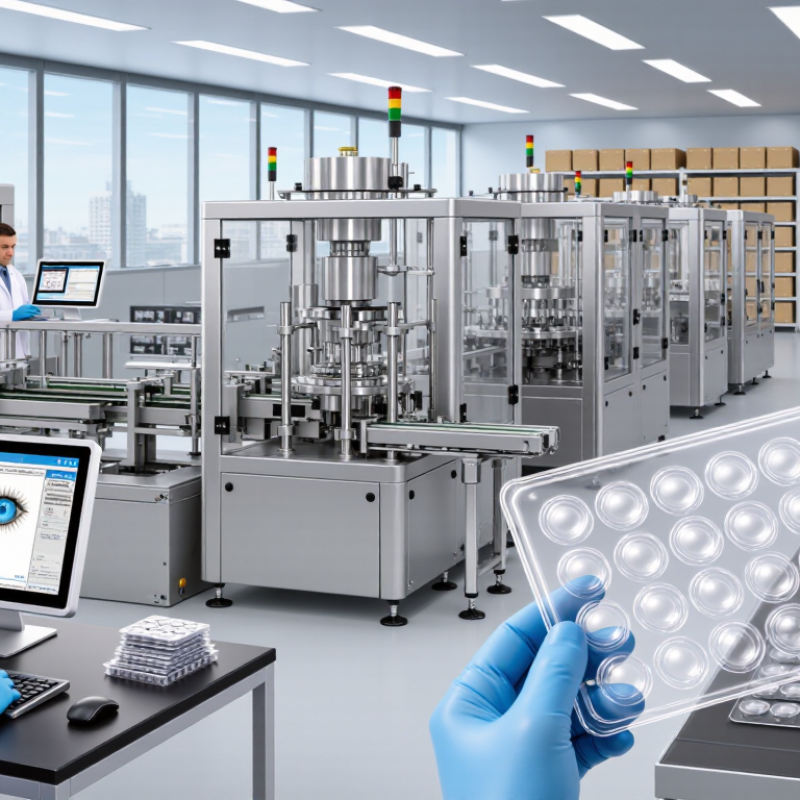
The best China private label contact lens supplier offers more than low factory pricing. Grand View Research valued the global contact lens market at approximately USD 9.8 billion in 2023. Its forecast also indicates continued growth through 2030. This growth increases pressure on suppliers to deliver consistent quality, not attractive samples alone. A capable manufacturer should explain its lens materials, oxygen permeability, water content, and replacement cycle clearly. Technical answers matter. The supplier should also operate under a documented quality system, such as ISO 13485, where applicable.
Reliable sourcing begins with traceable production. Ask for batch records, raw material controls, stability data, and inspection results. The U.S. Food and Drug Administration classifies contact lenses as medical devices, so regulatory expectations remain serious. Requirements differ by market, however. A supplier that promises universal approval deserves careful questioning. Independent testing can verify power accuracy, diameter, base curve, packaging integrity, and microbial safety. These checks cost time. They may prevent expensive recalls.
Private labeling also requires practical experience. The supplier should manage artwork control, barcode accuracy, multilingual labeling, and small pilot orders. Request production samples from different batches, not one perfect unit. Review communication during a factory audit or video inspection. No supplier is perfect. Delays, unclear revisions, or missing documents reveal weaknesses early. Industry forecasts are useful, but they cannot replace hands-on validation. A dependable partner combines transparent evidence, responsive engineering, and disciplined production.
A capable private label supplier should provide more than attractive samples. Request test reports for power accuracy, base curve, diameter, water content, oxygen transmissibility, and microbial limits. Review the manufacturing site’s quality system, ideally against ISO 13485 requirements. Ask for lot traceability, sterilization records, stability data, and complaint-handling procedures. A clean certificate is not proof of consistent production.
Regulatory documents must match the destination market. Confirm device classification, product registration, labeling rules, prescription requirements, and post-market reporting duties. For the United States, verify the applicable FDA pathway and supporting technical files. For other markets, check local conformity assessment rules instead of accepting a generic “CE” claim. Examine whether the legal manufacturer, private label owner, and importer are clearly identified.
Small details reveal real experience. Open several lots, inspect blister seals, compare lens geometry, and record packaging defects. Ask for retained samples and recent batch records. The CDC reported that 99% of surveyed adult contact lens wearers had practiced at least one risky behavior, showing why clear instructions matter. That survey was published from U.S. data, so it cannot represent every market. Still, it deserves attention. I would also test the supplier’s response to a simulated complaint. Slow replies may expose weak controls before customers do.
Choosing the best China private label contact lenses supplier requires more than comparing the lowest quote. Customization, pricing, and minimum order quantities can change the real cost quickly.
Start by listing your required lens parameters, including material, base curve, diameter, water content, tint, and wearing schedule. Packaging also matters. Ask whether the supplier can provide custom boxes, blister labels, instructions, and barcode support. Request samples before approving artwork. A sample may look attractive, yet feel uncomfortable during wear. That detail is easy to overlook.
Compare written quotations carefully. Separate lens costs from mold fees, printing charges, testing, packaging, shipping, and payment terms. Ask whether the price changes by prescription, color, or package size. Some suppliers advertise a low unit price but add expensive setup fees later. That is not always dishonest, but the quote needs clarity.
Minimum order quantities deserve equal attention. Check whether the MOQ applies per color, prescription, design, or total order. A flexible supplier may offer a smaller pilot order, although the unit price could be higher. This can protect cash flow while you evaluate demand. I have found that rushing into a large order creates avoidable storage pressure. My own comparison process is not perfect; production delays and sample revisions can still happen. Ask for documented quality procedures, traceability, inspection records, and applicable compliance evidence. Reliable communication matters too. Replies should be specific, not merely reassuring.
Indicative China private-label manufacturing benchmarks for initial supplier comparison. Actual terms vary by prescription range, materials, packaging, testing, certifications, and order volume.
| Product Category | Typical Replacement Cycle | Customization Options | Indicative Unit Price at Volume | Typical MOQ | Estimated Production Lead Time | Packaging Requirements | Best Fit for |
|---|---|---|---|---|---|---|---|
| Clear Daily Disposable Lenses | One day | Prescription range, base curve, diameter, water content, lens tint, blister foil, carton artwork, multilingual labeling | US$0.12–0.30 per lens Usually quoted at high-volume production quantities |
Approximately 50,000–100,000 lenses per prescription or design | 45–75 days after artwork approval and deposit | Individual blister packs; cartons commonly hold 10, 30, or 90 lenses | Online brands, optical retailers, subscription programs, and high-volume launches |
| Clear Monthly Hydrogel Lenses | Up to 30 days, subject to professional replacement guidance | Prescription parameters, base curve, diameter, material formulation, tint, blister design, carton design | US$0.20–0.55 per lens | Approximately 30,000–60,000 lenses per prescription or design | 40–70 days after specifications and packaging are confirmed | Individual blister packs or multi-lens cartons; sterile packaging required | New private-label brands seeking a lower entry price and longer shelf life |
| Monthly Silicone Hydrogel Lenses | Up to 30 days, subject to professional replacement guidance | Material selection, oxygen permeability target, prescription range, base curve, diameter, tint, custom packaging | US$0.35–0.90 per lens | Approximately 50,000–100,000 lenses per prescription or design | 60–90 days, especially for new material or custom tooling | Individual sterile blister packs; packaging must support material and regulatory claims | Premium brands prioritizing breathability, comfort positioning, and higher margins |
| Cosmetic Enhancement Lenses | Daily, monthly, or yearly depending on the approved product design | Graphic pattern, color tone, limbal ring, opacity, prescription range, base curve, diameter, blister foil, carton artwork | US$0.18–0.70 per lens | Approximately 20,000–50,000 lenses per color and prescription combination | 45–90 days, depending on color development and sample approvals | Individual blister packs; color name, batch details, expiry date, and instructions should be controlled carefully | Fashion, beauty, e-commerce, and seasonal color collections |
| Toric Lenses for Astigmatism | Daily or monthly depending on the approved design | Sphere, cylinder, axis, stabilization design, prism ballast, rotation control, packaging, prescription range | US$0.45–1.20 per lens | Approximately 50,000–150,000 lenses per design or parameter group | 75–120 days due to design validation and parameter complexity | Individual sterile blister packs with accurate parameter labeling | Optical channels and brands serving customers with astigmatism prescriptions |
| Multifocal or Presbyopia Lenses | Daily or monthly depending on the approved design | Power profile, add-power range, prescription parameters, base curve, diameter, material, packaging, fitting guidance | US$0.60–1.50 per lens | Approximately 75,000–150,000 lenses per design or parameter group | 90–150 days, including design verification and sample fitting | Individual sterile blister packs with fitting and usage information | Specialty optical businesses and brands targeting presbyopic wearers |
| Custom Branded Packaging Only | Uses the supplier's existing lens platform | Logo placement, carton artwork, blister foil, instruction leaflet, language versions, barcode, outer shipping carton | Usually adds US$0.03–0.20 per retail pack | Approximately 5,000–20,000 retail packs, depending on packaging components | 20–45 days after final artwork approval | Existing sterile lens packaging with customized secondary packaging | First-time buyers testing demand before investing in a new lens design |
How to compare suppliers: Request the same prescription range, material specification, packaging format, quantity, shipping term, testing scope, and certification requirements from every supplier. Confirm whether the quoted price includes tooling, artwork, laboratory testing, registration support, freight, and replacement of defective units. All contact lenses should be manufactured, labeled, and sold in accordance with the applicable regulations in the destination market.
Best China Private Label Contact Lenses Supplier?
How to Verify Manufacturing Capacity and Supplier Reliability
Choosing a private label contact lens supplier requires more than comparing quotations. Grand View Research valued the global contact lens market at approximately USD 9.8 billion in 2023. That scale attracts capable manufacturers and careless intermediaries. The World Health Organization reported that at least 2.2 billion people have vision impairment, making product quality a serious responsibility.
Visit the production site, if possible. Check whether cleanrooms, molding lines, hydration tanks, inspection equipment, and packaging areas operate daily. Ask for monthly output records, not only installed capacity. Compare these figures with batch numbers on recent shipment documents. A polished factory video proves little. Request production records, certificates of analysis, stability data, and complaint logs. Verify that the ISO 13485 certificate covers contact lens manufacturing, rather than unrelated medical products.
Supplier reliability appears in small details. Can the team explain material traceability within minutes? Are rejected lenses isolated and documented? Does the supplier test oxygen permeability, water content, power accuracy, sterility, and packaging integrity through qualified procedures? Samples should be tested by an independent laboratory before large orders. Manufacturing capacity is not reliability.
One weakness in my own checklist would be trusting fast replies too much. Clear answers matter, but controlled records matter more. Require a written change-notification process, defined retention samples, and agreed audit rights. Review these controls before approving artwork or paying for tooling.
Use this evidence checklist when evaluating a private-label contact lens manufacturer. The quantities represent practical audit samples to request, not supplier performance claims or regulatory minimums. Regulatory documents should be confirmed for the destination market.
Reference frameworks: ISO 13485 quality management systems, ISO 10993 biological evaluation, ISO 18369 contact lenses, and applicable market authorization requirements such as FDA 510(k).
Choosing a China private label contact lens supplier requires more than comparing unit prices. Grand View Research valued the global contact lens market at approximately USD 9.47 billion in 2023. That scale attracts capable factories, but also creates crowded, uneven sourcing conditions.
Ask for a complete technical file before discussing large orders. It should include material specifications, ISO 13485 certification, ISO 18369 test records, sterilization controls, and batch traceability. Confirm whether certificates match the actual manufacturing site. A polished certificate can still hide weak production controls.
Request samples from at least three production batches. Check lens diameter, base curve, water content, packaging seals, and visual defects. A practical test includes wearing samples under professional supervision. Comfort can change after several hours, not only during a five-minute fitting. The CDC estimates that about 45 million U.S. adults wear contact lenses, so comfort and safe-use instructions deserve serious attention.
During onboarding, define acceptance standards in writing. Include defect limits, replacement procedures, inspection rights, complaint response times, and change-notification rules. Ask to review the factory’s traceability process from raw material receipt to finished carton. Keep a retained sample from every shipment.
The uncomfortable part is forecasting. New suppliers may promise fast customization, yet tooling, validation, and packaging approvals often take longer. I once underestimated this stage in a sourcing plan; the launch date moved because artwork approval was treated as a minor task. Start with a controlled pilot order. Measure delivery accuracy, documentation quality, and communication discipline before scaling. Market data helps, but factory evidence should make the final decision.
The supplier should explain lens material, oxygen permeability, water content, and replacement cycles clearly. Technical answers matter. Records matter more.
Visit the facility when possible. Check cleanrooms, molding lines, hydration tanks, inspection equipment, and packaging areas. Request monthly output records, not only installed capacity.
Ask for batch records, raw material controls, stability data, inspection results, and certificates of analysis. Complaint logs can reveal recurring problems. Missing documents deserve careful review.
Ask how each lens batch connects to materials, inspections, and shipment records. Rejected lenses should be isolated and documented. Traceability should take minutes to explain.
Independent testing should check power accuracy, diameter, base curve, oxygen permeability, water content, microbial safety, and packaging integrity. Testing costs time. It may prevent costly recalls.
No. A video shows appearance, not daily production control. Compare recent batch numbers with shipment records and production documents.
Review artwork control, barcodes, multilingual labeling, and packaging proofs carefully. Request a small pilot order before large production. Tiny errors can spread widely.
Require written change notifications, retention samples, and agreed audit rights. Test samples from different batches. One perfect sample proves little.
No. Fast replies help, but controlled records matter more. I once trusted response speed too much; that judgment needs restraint.
Choosing the best China private label contact lens supplier requires a careful review of quality, compliance, customization, pricing, production capacity, and long-term reliability. A trustworthy supplier should use consistent materials, maintain strict quality control, and provide complete documentation demonstrating compliance with applicable medical device regulations and safety standards. Buyers should also assess product performance, packaging options, design flexibility, minimum order quantities, lead times, and total costs rather than focusing only on the lowest price.
Before placing an order, it is important to verify the supplier’s manufacturing facilities, testing procedures, certifications, communication efficiency, and ability to meet projected demand. Requesting samples, reviewing production records, and confirming inspection processes can help reduce risks. A clear onboarding process should define product specifications, packaging details, quality requirements, delivery schedules, and after-sales responsibilities. By comparing suppliers systematically, businesses can build a dependable partnership and develop safe, compliant, and market-ready Private Label Contact Lenses.