Gray Colored Contact Lenses can broaden a store’s color range, but gray is not one simple shade. Cool silver, soft smoke, and gray with blue or green undertones can look very different on the same display card. A customer’s natural iris color, lighting, and lens pattern also affect the final result. Small details matter. This guide explores how to compare shades, choose styles for different customer preferences, and build a balanced selection without relying on appearance alone.
For store buyers, good choices begin with clear product information. Review available prescriptions, lens materials, replacement schedules, care instructions, and supplier documentation. Check that products come from reliable sources, and follow applicable local requirements and product labeling. Customer comfort and eye health should remain part of the conversation; lens fit and use may require guidance from a qualified eye-care professional. A sample may appear subtle beneath bright retail lights, then look stronger near a window. That can make forecasting tricky, and no shade chart predicts every result. It is worth admitting that uncertainty rather than promising a perfect match. Practical display guidance, thoughtful assortment planning, and honest descriptions can help customers compare options and help stores make more informed purchasing decisions.
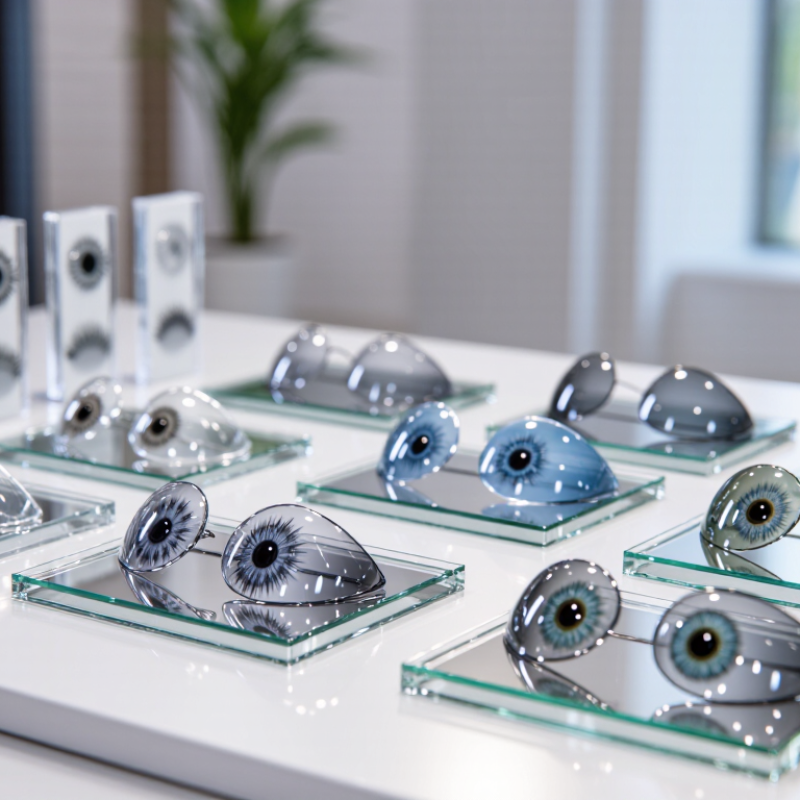
Gray lenses vary in opacity, pattern, and edge definition, so one shade will not suit every wearer. Enhancement styles blend with lighter irises, while opaque designs create a more visible change on darker eyes. A soft limbal ring can sharpen the eye’s outline; a broken pattern may look more subtle up close. Small details matter.
Ask shoppers what they hope to see in a mirror: a cool tint, a smoky change, or a high-contrast look. Natural iris color, prescription, pupil size, and lighting all affect the result. Gray may appear blue in daylight and nearly charcoal indoors. Photos can mislead. Shade charts offer guidance, but they cannot promise an exact match. That uncertainty is easy to overlook.
Comfort and safe fit should guide the choice as much as appearance. Colored lenses need an appropriate prescription and professional fitting, even when worn for cosmetic reasons. Encourage shoppers to follow care instructions, replace lenses on schedule, and never share them. Dryness, redness, or blurred vision calls for removing the lenses and seeking advice from an eye-care professional. Make lens type, wearing schedule, and care needs easy to compare in store.
Gray contact lenses can look soft and natural under store lighting, yet material matters more than the color sample suggests. Compare hydrogel and silicone hydrogel options by checking oxygen permeability, replacement schedule, and intended wear time. Water content alone does not predict comfort. Fit, lens edge design, tear film, and individual sensitivity all play a part.
That matters.
Ask suppliers for clear specifications and avoid claims that a lens will feel comfortable for every wearer.
Safety deserves the same scrutiny as appearance. Check that packaging is sealed and sterile, with readable lot numbers, expiry dates, and care instructions. Request documentation showing the product meets applicable safety standards and local requirements. Keep records that connect each item to its source and production lot.
Looks can mislead.
A gray tint may appear different across eye colors and lighting, so review samples without promising an exact result. Encourage customers to seek professional fitting and follow wear and cleaning instructions. Store staff cannot reliably assess eye health from a quick conversation. This process is not perfect, but careful records and honest product descriptions reduce avoidable risk.
Gray contact lenses vary from pale silver to smoky charcoal. A cool, light gray can look subtle on blue or light brown eyes, while a darker gray may read more clearly on deep brown irises. Results depend on natural eye color, pupil size, and lighting. A shade that looks soft under studio lamps may appear flat beside a sunlit window. Keep that in mind.
Opacity matters just as much as hue. Translucent designs let more of the natural iris show through, creating a blended effect. Higher-opacity patterns cover more pigment and may produce stronger contrast. For a store display, compare samples against light, medium, and dark eye-color swatches; avoid promising identical results for every wearer.
CDC’s 2015 review of serious contact-lens-related eye infections found that about one in five reported patients had eye damage. That evidence supports clear fitting and care guidance, not just attractive shade names.
Tips: Show gray samples in natural and indoor light. Ask customers about their natural eye color and desired contrast. Treat product photos as a guide, not a guarantee. I’d also keep shade descriptions plain; “storm” sounds appealing, but tells shoppers very little.
A dependable supplier should provide clear product specifications, consistent packaging, and responsive support. Ask for current quality records, lot traceability, expiry dates, and written handling instructions. Request samples before placing a large order. Compare the gray shades under bright retail lighting and softer indoor light; a lens that looks silver in a display may appear much darker in a customer’s home. Easy to miss. Check whether product photos match the actual lens appearance, and confirm the supplier’s process for damaged or inconsistent stock. Price matters, but unusually low quotes deserve careful questions.
Plan sizes and product options around customer demand, not guesswork. Compare base curve and diameter across the available range, but never assume one size fits every eye. Contact lenses need appropriate professional fitting, even when they are colored. Stock a considered mix of gray tones, such as cool slate and softer gray-green, and review sales before expanding. Ask suppliers to explain wear schedules and care instructions for each option; do not rely on packaging shorthand alone. I would not promise that a shade will look identical on everyone. Natural eye color, lighting, and lens opacity can change the result. Keep descriptions specific, and invite customers to seek qualified eye-care guidance when fit or comfort is uncertain.
For gray colored contact lenses, plan a narrow, testable assortment rather than buying every shade. Grand View Research estimated the global colored contact lens market at about US$1.8 billion in 2023, with projected growth through 2030. That signals category interest, not guaranteed demand for gray. Track weekly sales by shade, prescription range, and replacement schedule. Keep core gray tones in common prescriptions, then use small quantities to test lighter or patterned options. Review returns and customer requests monthly. My first forecast would still be a guess.
Price by landed cost, fitting support, and replenishment risk—not color alone. Compare nearby retailers and online listings, but avoid matching the lowest price without checking service and product details. The CDC’s 2015 MMWR report found that 99% of surveyed contact lens wearers reported at least one risky hygiene behavior. Use that finding to make guidance part of the purchase: explain cleaning, case replacement, wear limits, and when to seek professional advice. Keep approved fitting and care information beside the display, and direct customers to an eye-care professional for fit or discomfort concerns. Make it easy to ask. Track whether this guidance reduces avoidable returns; it may not.
Illustrative assortment plan for a small-to-medium retail launch. Stock allocations and USD price bands below are planning assumptions, not market averages; adjust them to supplier quotes, local demand, and applicable regulations.
| Gray shade / look | Likely customer preference | Suggested lens options | Starting inventory share | Illustrative retail price per box (USD) | Customer guidance | Store planning note |
|---|---|---|---|---|---|---|
| Soft gray | Subtle change with a low-contrast, natural-looking effect | Prescription and, where legally permitted, plano options; daily or monthly replacement formats | 30% | $20–$45 | Explain that the visible result depends on the wearer’s natural eye color, lighting, and lens design. Confirm the customer has an appropriate prescription and fitting. | Useful as a core shade to test across popular prescription powers and available base curves. |
| Cool or silver gray | A brighter, cooler-toned change that may appear more noticeable | Prescription and legally permitted plano options; offer only replacement schedules stated on the product labeling | 25% | $20–$45 | Set expectations with color examples shown under neutral lighting. Do not promise an identical result for every wearer. | Begin with a narrower size and power range, then replenish based on sell-through. |
| Gray with a defined limbal ring | A more defined appearance around the iris | Prescription and legally permitted plano options; daily or reusable formats if offered by the supplier | 20% | $20–$45 | Discuss the cosmetic effect without implying that the lens changes eye health or vision quality. Encourage a professional fitting before wear. | Track returns and customer feedback by shade and prescription range; avoid over-ordering less-tested designs. |
| Deep or charcoal gray | A darker, more dramatic look | Prescription and legally permitted plano options; replacement schedule and care requirements depend on the specific lens | 15% | $20–$45 | Remind customers that appearance varies with natural eye color and that lenses should never be shared, even for cosmetic use. | Use a smaller initial allocation until local demand is established. |
| Gray-green or gray-blue blend | A mixed-tone effect rather than a uniform gray appearance | Prescription and legally permitted plano options; stock only verified product specifications and labeled replacement schedules | 10% | $20–$45 | Describe the shade as a visual effect, not a guaranteed color outcome. Direct customers with discomfort or vision changes to an eye-care professional. | Consider a limited trial assortment and review sales before expanding shade variations. |
Safety and compliance: Contact lens rules differ by jurisdiction. In the United States, decorative and corrective contact lenses are regulated medical devices and require a valid prescription; verify local requirements before selling. Customers should follow their eye-care professional’s instructions and the product label, never sleep in lenses unless specifically directed, and stop wearing lenses and seek professional advice if they experience pain, redness, or blurred vision.
Fit, lens edges, tear film, and personal sensitivity all matter. Water content alone cannot predict comfort. That is easy to overlook.
Compare oxygen permeability, replacement schedules, and intended wear times. Ask for clear specifications rather than assuming one material suits everyone.
No. Natural iris color, pupil size, and lighting change the result. A pale gray may look subtle on light eyes and stronger on dark eyes.
Translucent patterns blend with more natural iris color. Higher-opacity designs cover more pigment and can create stronger contrast. Photos are only guides.
Request samples, product specifications, quality records, and clear handling instructions. Check lot numbers, expiry dates, packaging, and support for inconsistent stock.
Look for sterile, intact packaging with readable lot numbers, expiry dates, and care instructions. Keep records linking each item to its source.
Compare available base curves and diameters, but do not assume one size fits every eye. Review sales before expanding the shade range.
Encourage professional fitting and following the lens-specific wear and cleaning instructions. Store staff cannot assess eye health through a brief conversation.
Use plain terms such as “cool slate” or “gray-green.” Compare samples in indoor and natural light. I still find shade names easy to overtrust.
Choosing Gray Colored Contact Lenses for your store starts with understanding the different lens types and the needs of the people who may wear them. Consider whether customers are looking for a subtle change or a more noticeable effect, and evaluate lens materials, comfort, fit, and relevant safety standards. Comparing gray shades and levels of opacity can help you explain how lenses may look on different natural eye colors, while clear product information supports informed choices.
When selecting products, assess supplier reliability, available sizes, and the range of options offered. Plan inventory around customer preferences and seasonal demand, and set pricing that reflects product quality and your store’s needs. Helpful guidance should encourage customers to follow care instructions, check fit and comfort, and consult an eye-care professional when appropriate. A thoughtful selection and clear support can help your store serve customers responsibly and confidently.