Choosing the best Glitter Colored Contact Lenses supplier requires more than comparing catalog photos or attractive prices. Color intensity, glitter distribution, edge smoothness, oxygen permeability, and packaging quality can affect both appearance and wearing comfort. A reliable supplier should explain these details clearly.
Dr. Thomas L. Steinemann, a corneal specialist and contact lens safety authority, has repeatedly warned, “Decorative contact lenses are not cosmetics; they are medical devices.” His statement sets an essential standard for this industry. Glitter Colored Contact Lenses should be treated as vision products requiring professional fitting, accurate prescriptions, and responsible aftercare. A polished product image cannot prove safety.
A serious supplier should provide traceable batch numbers, material specifications, sterilization records, and quality-control procedures. Certifications such as ISO 13485 may support credibility, but buyers should verify their validity. Samples should be inspected under strong light. Look for uneven glitter, rough rims, color bleeding, or damaged blister packs.
Supplier experience matters. Ask how long the company has produced colored lenses, which markets it serves, and how it handles complaints. Request sample lenses before placing a large order. Check whether customer support responds with technical answers, not vague promises.
There is no flawless supplier. That deserves honesty. Even attractive lenses may feel unsuitable for some eyes. Individual tolerance differs. The final choice should balance visual effect, documented quality, professional fitting, and dependable communication. This approach helps buyers identify a Glitter Colored Contact Lenses supplier that is credible, transparent, and suitable for long-term cooperation.
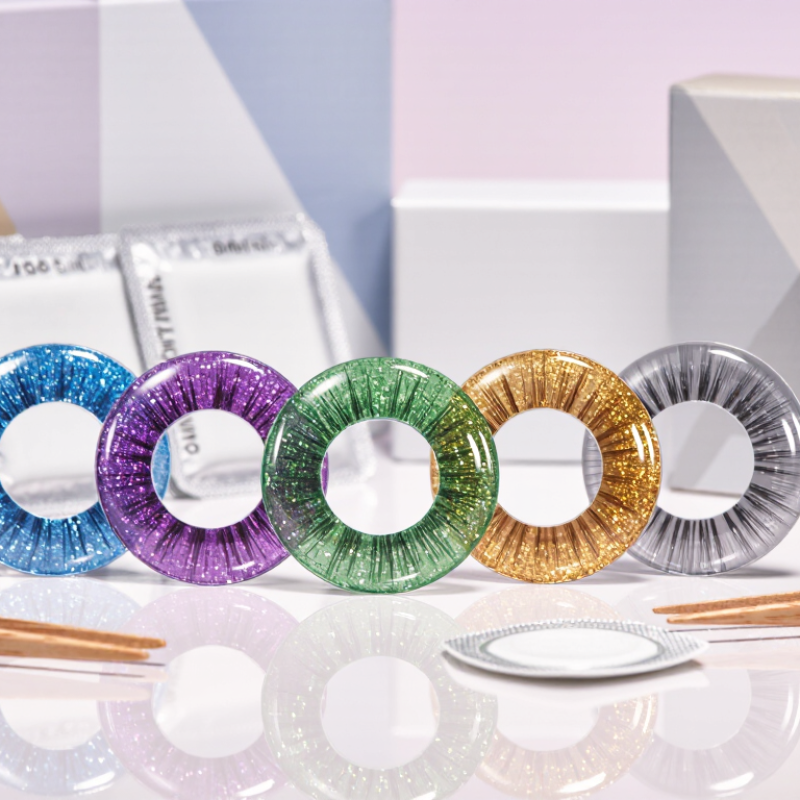
Glitter colored contact lenses are decorative lenses designed to change the eye’s color and add a reflective sparkle. The glitter effect usually comes from carefully printed patterns, not loose glitter inside the lens. Fine dots, metallic tones, and layered pigments create different levels of shine under sunlight or indoor lighting.
The result can look soft, bright, or noticeably dramatic. It depends on the base color, pupil opening, pattern density, and lens diameter. Some designs appear natural from a distance but show tiny reflective details up close. The sparkle is not always perfectly even. That slight variation may look more realistic, though poor printing can create blurred edges or uncomfortable visual distractions.
A dependable supplier should provide material details, production records, batch traceability, and clear wear instructions. Optical quality matters more than a strong visual effect. The lens should fit the eye correctly and allow sufficient oxygen transmission. A professional eye examination is important, especially for prescription lenses. Cosmetic lenses still touch sensitive eye tissue.
Never share contact lenses. Clean them only with approved care solutions, and replace them according to the stated schedule. Dryness, redness, pain, or blurred vision requires immediate removal and professional advice. In practical product evaluation, appearance is easy to judge, but comfort often reveals the real quality. One attractive sample is not enough. Supplier consistency matters.
A reliable China-based glitter lens supplier should show more than attractive product photos. Quality begins with documented materials, controlled production, and trained inspection staff. Ask for product specifications, batch records, test reports, and clear usage instructions. These documents should match the requirements of each target market. Safety comes first. Glitter pigments must remain securely contained and evenly distributed. The lens surface should feel smooth, without rough edges, visible particles, or irregular coloring. Experienced suppliers can explain their inspection process in practical detail.
Customization is another key feature. Suppliers may offer different base colors, glitter densities, diameters, powers, packaging options, and sample quantities. However, customization should not weaken comfort or optical performance. Request pre-production samples and inspect them under bright, neutral light. Check the color from different angles. A polished sample is not proof of consistent mass production. That mistake is easy to make.
Communication also reveals supplier reliability. Clear replies, stable lead times, and traceable shipping records support professional cooperation. A capable supplier should discuss storage, shelf-life labeling, complaint handling, and corrective actions. Ask how defective units are isolated and recorded. Small production errors can still happen. What matters is honest reporting and a workable response. I would also verify licenses, facility information, and independent testing before placing a large order. A low price may look attractive, but missing documentation can create expensive problems later.
Best China Glitter Colored Contact Lenses Supplier?
Choosing a glitter colored contact lens supplier requires more than attractive sample photos. In practice, inspect the lens surface under bright light. Glitter should appear evenly distributed and fully sealed inside the lens. Loose particles, rough edges, bubbles, or fading indicate possible manufacturing problems. The lens should also match its stated base curve, diameter, water content, and oxygen permeability. Ask for batch records and independent laboratory reports.
Safety evidence matters more than marketing language. Check whether the manufacturer maintains ISO 13485 certification and whether the certificate covers contact lens production. Confirm applicable CE documentation and local regulatory registration for your target market. A certificate image alone proves little. Verify its validity, scope, issuing organization, and product details. Request sterilization records, packaging tests, shelf-life data, and traceability information. Samples should come from regular production, not a specially prepared batch.
Ask how complaints are investigated and how defective lenses are recalled. Reliable suppliers provide clear answers, written procedures, and trained quality staff. They should also support professional fitting and proper wear instructions. Colored lenses can still damage the eye when poorly fitted or used incorrectly. Never treat decorative lenses as harmless accessories. I would also test several batches, because one acceptable sample can create false confidence. My own evaluation can be imperfect, so an independent eye-care professional and qualified testing laboratory should review critical findings before purchase.
| Evaluation Dimension | Weight | Objective Data to Check | Required Evidence | Acceptance Guidance |
|---|---|---|---|---|
| Regulatory Authorization | 20% | Legal manufacturer, device classification, intended market, model numbers, and authorized product scope. | Valid market authorization or registration, declaration of conformity where applicable, product labels, and instructions for use. | The documents must identify the same lens models, materials, powers, and intended use as the products being supplied. |
| Quality Management System | 12% | Manufacturing controls, change control, complaint handling, corrective actions, and batch-release procedures. | Current ISO 13485 certificate issued by an accredited certification body, including the relevant product scope and manufacturing site. | Certificate status, site address, scope, and validity should be independently verifiable. |
| Material and Biocompatibility | 12% | Polymer composition, water content, ionic character, surface treatment, extracts, and biological safety. | Material specification, supplier declaration, and biocompatibility evaluation or test reports based on ISO 10993 principles. | The material data must match the finished lens and must not rely only on generic material marketing claims. |
| Optical Power Accuracy | 10% | Labeled sphere power, cylinder power if applicable, axis, and measured power across production batches. | Certificate of analysis, batch test results, and calibrated measurement equipment records. | Measured values should comply with the approved product specification and applicable contact-lens tolerance requirements. |
| Geometric Dimensions | 8% | Base curve, overall diameter, optical zone, center thickness, edge profile, and tint diameter. | Technical drawing, dimensional inspection report, and batch sampling records. | Dimensions should remain within documented tolerances and provide stable centration and movement on the eye. |
| Oxygen Performance | 8% | Material oxygen permeability (Dk), lens oxygen transmissibility (Dk/t), and center thickness. | Test report identifying the test method, material, lens thickness, temperature, and measured Dk or Dk/t values. | Compare Dk/t with the intended wearing schedule; do not evaluate oxygen performance from water content alone. |
| Glitter and Pigment Encapsulation | 10% | Pigment location, glitter particle containment, surface smoothness, coating integrity, and optical-zone clearance. | Microscopic inspection, abrasion or flex testing, extractables assessment, and production-process controls. | Colorants and glitter must be fully encapsulated or otherwise prevented from direct ocular contact; no loose particles, flaking, or rough edges are acceptable. |
| Sterility and Packaging Integrity | 8% | Sterilization method, sterility assurance level, seal integrity, solution compatibility, and container closure. | Sterilization validation, sterility test records, packaging validation, and lot-release documentation. | Single-use lenses should be supplied in intact, sealed, labeled packaging with no leakage, damage, or unexplained solution changes. |
| Labeling and Traceability | 5% | Lot number, manufacturing date, expiration date, power, base curve, diameter, material, and wearing schedule. | Artwork proof, sample packaging, lot-traceability procedure, and recall process. | Every unit should be traceable to raw materials, production records, inspection results, and distribution records. |
| Quality Consistency | 4% | Defect rate, batch-to-batch color consistency, dimensional variation, reject rate, and complaint rate. | At least three recent batch records, inspection data, nonconformity reports, and corrective-action summaries. | Prefer suppliers that provide trend data rather than one isolated inspection report. |
| Customer Safety Support | 3% | Fitting guidance, contraindications, cleaning instructions, adverse-event handling, and response time. | Instructions for use, safety data, complaint procedure, and documented post-market surveillance process. | Safety instructions must clearly state that decorative lenses require professional fitting and proper care. |
| Total Evaluation Weight | 100% | Use documented evidence, independent verification, and pre-shipment sampling before approving a supplier. | ||
Important: Colored and decorative contact lenses are medical devices in many markets. Product requirements, registration pathways, labeling rules, and professional-fitting obligations vary by destination country. Certification documents should be verified with the issuing authority and matched to the exact manufacturing site and lens model.
Choosing a reliable China supplier requires more than comparing the lowest quote. Customization often includes glitter density, iris patterns, color tones, lens diameter, base curve, packaging, and prescription options. Ask for physical samples before approving production. A glitter effect may look subtle in a digital image but appear much stronger under studio lighting. Experienced suppliers should explain material choices, production controls, testing documents, and labeling requirements for your target market.
Pricing usually changes with customization and order volume. Simple stock colors may have lower unit costs, while exclusive artwork, custom packaging, and small trial runs increase the price. Minimum order quantities can range widely by design and packaging type. A supplier offering a low MOQ may charge more per pair, but this can reduce inventory risk. In my sourcing experience, I once focused too heavily on the unit price and overlooked sample fees and packaging costs. That decision needed correction.
Tips: Request a detailed quotation with sample fees, mold charges, packaging, shipping, and replacement terms. Confirm the MOQ for each color, not only the total order. Check batch consistency carefully. A few lenses may show slight differences, so define acceptable color variation in writing. Also verify product documentation and local compliance before selling. Personal comfort and eye safety should remain more important than a dramatic glitter effect.
Best China Glitter Colored Contact Lenses Supplier?
How to Select the Best Supplier for Your Business Needs
Choosing a supplier requires more than comparing glitter colors and prices. Start by checking manufacturing experience, product documentation, and quality control procedures. A dependable supplier should explain material specifications, color consistency, inspection stages, and packaging protection clearly. Ask for current certificates and testing records that match your target market’s requirements. Vague answers deserve caution.
Request samples before placing a large order. Examine the lens surface, printed pattern, color balance, moisture retention, and package seals. Compare several batches when possible. Small differences can reveal weak process control. Also review the supplier’s production capacity, minimum order quantity, lead time, and private-label support. Your sales forecast should guide the order size, not pressure from a sales representative.
Communication matters just as much as production. Test how quickly the supplier responds to technical questions and handles sample changes. A useful partner records specifications instead of relying on casual messages. Discuss defect rates, replacement procedures, shipping documents, and complaint handling in writing. I have seen buyers focus too heavily on attractive samples. That is a mistake. Samples may not represent routine production. Ask for batch records and, when practical, arrange independent inspection before shipment. No supplier is perfect, and your evaluation can miss details. Build a review step into every order.
This practical procurement model assigns a 100% evaluation weight across the factors that most directly affect colored contact lens safety, product consistency, and business performance. Quality and regulatory compliance should receive the highest priority, followed by color consistency, delivery reliability, customization capability, and commercial terms.
They are decorative lenses that change eye color and add reflective sparkle. Printed dots and layered pigments create the effect. Loose glitter is not placed inside the lens.
Base color, pupil opening, pattern density, and lens diameter all influence the result. Lighting changes the effect. Some lenses look subtle indoors but brighter in sunlight.
Check manufacturing experience, material specifications, quality procedures, certificates, and testing records. Ask for batch traceability and production documentation. Vague answers deserve caution.
Samples reveal surface quality, color balance, moisture retention, and package seals. Compare samples from different batches when possible. One attractive sample proves little.
Confirm production capacity, minimum order quantity, lead time, and packaging protection. Discuss defect rates and replacement procedures in writing. Sales pressure should not determine order size.
Fast, accurate responses can reveal technical competence. Ask whether the supplier records specifications and sample changes. Casual messages may cause avoidable misunderstandings.
Proper fit and oxygen transmission are essential. A professional eye examination is especially important for prescription lenses. Decorative does not mean risk-free.
Never share lenses. Clean them only with approved care solutions. Replace them according to the stated schedule. Remove them immediately if pain, redness, dryness, or blurred vision appears.
Buyers may focus too much on attractive colors or low prices. Routine production can differ from a perfect sample. Independent inspection may catch overlooked problems. No evaluation is flawless.
Glitter Colored Contact Lenses are cosmetic lenses designed to create a sparkling, reflective effect that enhances or changes the appearance of the eyes. China-based suppliers often provide a broad selection of colors, patterns, glitter effects, and prescription options, along with flexible customization services for packaging and product design. When evaluating suppliers, businesses should focus on lens materials, oxygen permeability, moisture performance, color stability, manufacturing consistency, and quality-control procedures. It is also essential to verify relevant certifications, testing reports, labeling accuracy, and compliance with the regulations of the intended sales market.
A suitable supplier should offer transparent pricing, reasonable minimum order quantities, dependable production capacity, and clear communication throughout sampling and manufacturing. Buyers should compare customization possibilities, sample quality, delivery schedules, after-sales support, and documentation rather than choosing solely on price. The best supplier is one that can consistently deliver safe, compliant, well-designed products while matching the buyer’s target market, budget, order volume, and long-term business requirements.